
Hello everyone, this is DIY Renova.
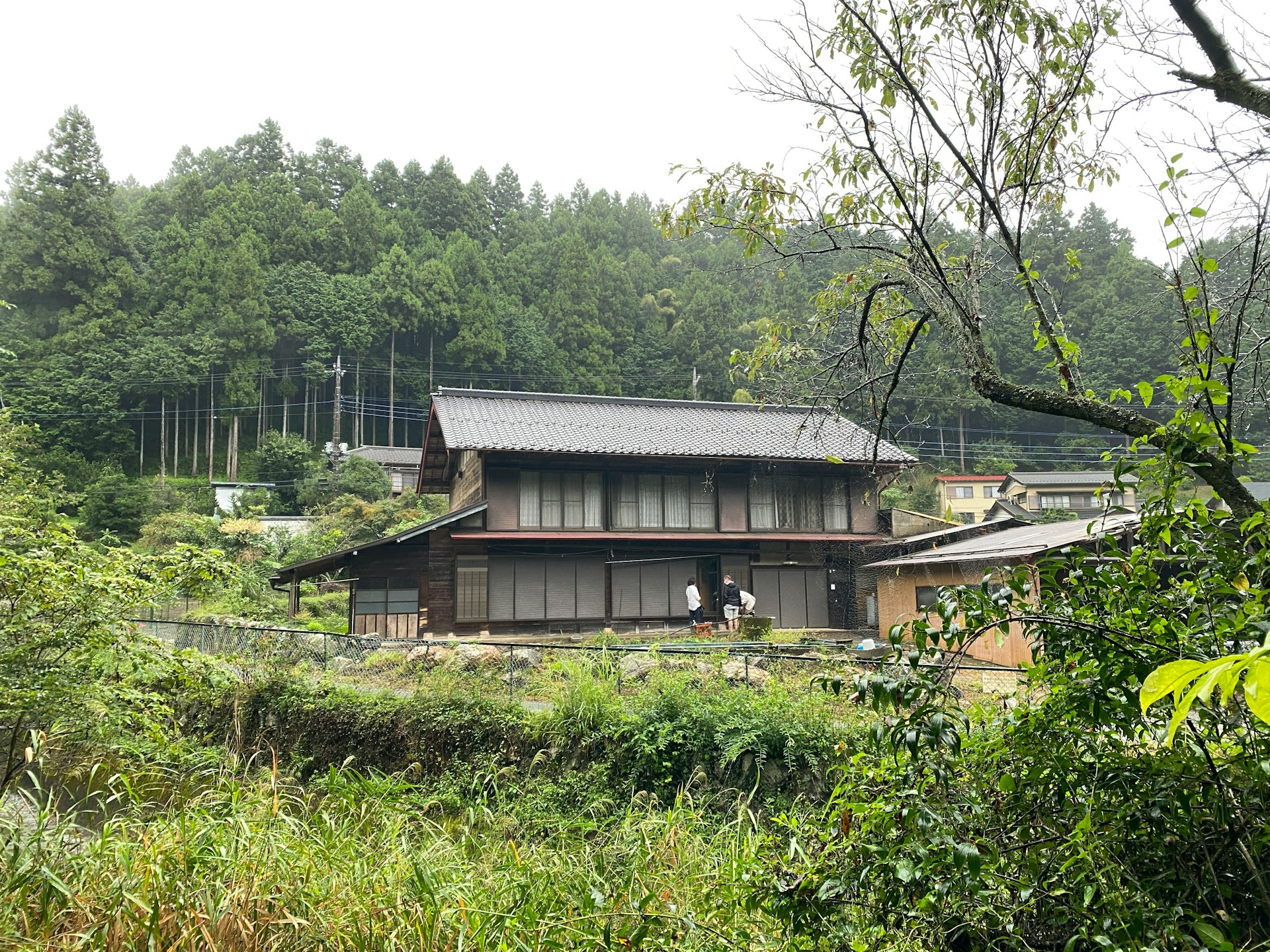
When looking at Japanese houses from a foreigner's point of view, there are quite a lot of questions about why they are the way they are.
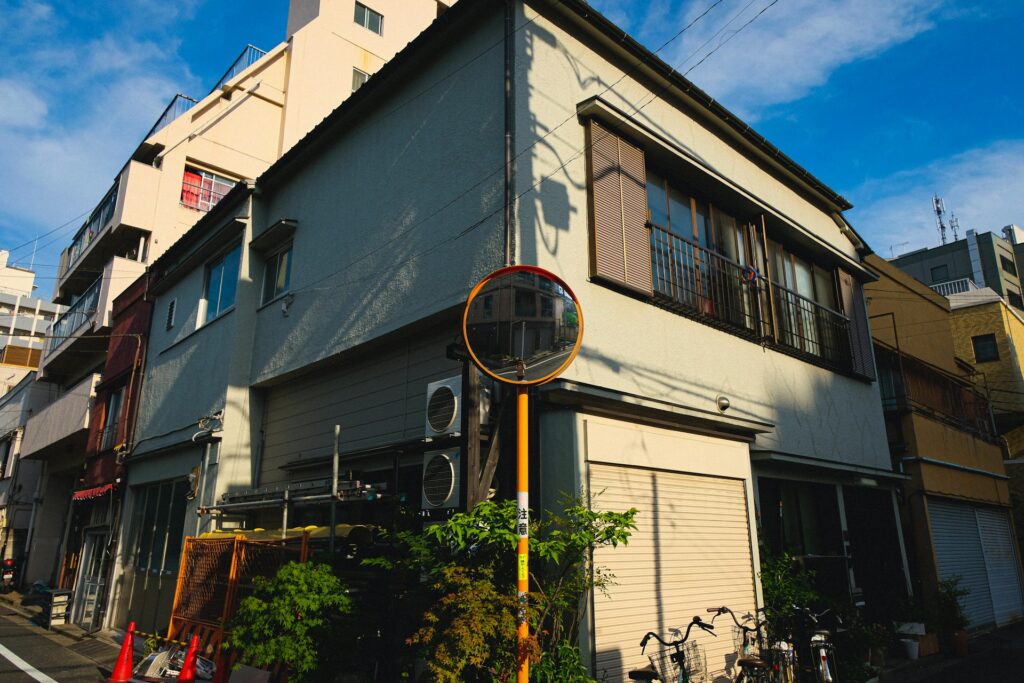
Why there are so many two-story wooden houses, what people think of people who choose pencil houses in the city or reinforced concrete houses... Even for people who like self-renovation, it is very important to understand the ``premises of Japanese houses'' first.
In this article, we will summarize the basic characteristics of Japanese housing by comparing it with major countries such as Europe, America and South Korea, and summarize the points that ``Knowing these things will make DIY easier'' from the perspective of self-renovation.
If you're wondering "How much renovation or remodeling can I actually do on my own home?" or "Where should I even start?", please visit this page. If you're looking to learn more about specific renovation processes or construction details, don't miss this page as well!
So, here you go.
Roughly organize the "normal" Japanese housing
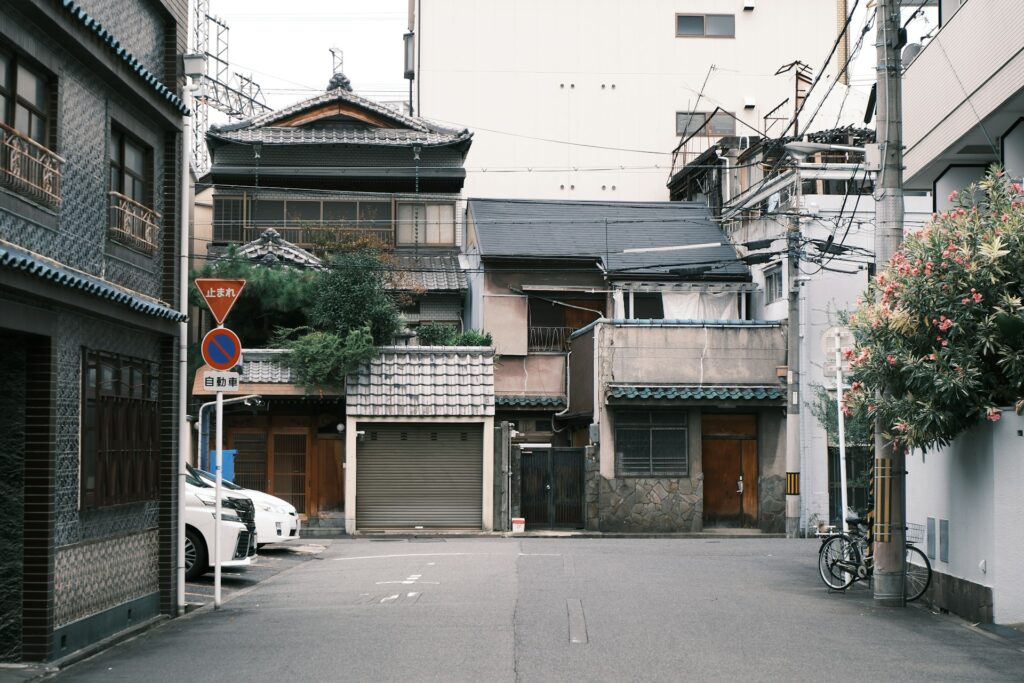
The main character is wooden, but not everything is made of wood.
Looking at the construction start statistics for new housing in Japan, even now, roughly more than half are wooden houses (it is reported that about 55% are wooden houses).CBL.
In more detailed architectural statistics, it is reported that approximately 90% of single-family houses are made of wood.iibh.org.
There are two main types of wooden structures here.
- Conventional frame construction method (traditional wooden construction with pillars and beams + metal reinforcement)
- Frame wall construction method (so-called two-by-four)
Both have the same thing in common: ``The frame of the building is made of wooden pillars and walls,'' but the way power is transmitted is different.
Traditionally, pillars, beams, and braces (diagonal members) are used to release seismic force, while two-by-fours use surfaces (such as plywood) to resist earthquakes (wooden houses are lightweight, have high resilience, and are said to absorb earthquake energy easily).IISEE.
On the other hand, apartments and some detached houses in urban areas are
- Reinforced concrete construction (reinforced concrete)
- Steel frame (light/heavy steel frame)
is the mainstream. Reinforced concrete structures are ``heavy but strong, with high fire resistance and sound insulation,'' while steel structures are ``light and easy to skip spans (easy to create large openings).''hokushinfudosan.co.jp.
The standard number of floors is 2 floors, but 3 floors are increasing in urban areas.
On a national level, the overwhelming majority of wooden houses are two-story houses, and there are also a certain number of one-story single-story houses. The ratio of 3-story buildings is high in urban areas where land is expensive (In the Housing and Land Statistics Survey, the distribution of detached houses by number of building floors is published)e-Stat.
Particularly in central Tokyo, there are many ``slender detached houses'' with three stories on a lot of 30 to 50 square meters, and this is the origin of the so-called ``pencil house.''
Total floor area and scale of the home
Data shows that the average size of a residential unit in urban areas, including condominiums and detached houses, is around 60 to 70 square meters in Tokyo, for example.E-Housing.
On the other hand, in suburbs and local cities, two-story wooden buildings with a total floor area of 100 to 140 square meters are common, and many so-called suburban houses with gardens and parking spaces are also seen.
As a comparison,
- Japan: Floor area per person is approximately 35 m2
- America: Approximately 67㎡ per person
International comparisons such as these are sometimes introduced, and there is a tendency for Japan to have "more compact space per person than Europe and the United States."E-Housing.
A quick comparison of the differences between housing in Japan and major countries
From here, I will roughly summarize the differences between "Japan and other countries" from a perspective that seems to be related to self-renovation.
Difference in materials
The general trend can be easily understood by imagining it as follows.
- Japan
- Detached houses: Mainly wooden (approximately 90% of detached houses are made of wood)iibh.org
- Apartment housing: Middle and high-rise buildings are mainly constructed of reinforced concrete.
- America
- Detached houses: Like Japan, many are wooden, but lightweight wooden structures such as 2×4 are standard.
- Apartment housing: reinforced concrete or steel frame construction
- western europe
- Detached houses/low-rise: Often a combination of brick, block, stone construction + reinforced concrete, etc.
- Many countries have stricter insulation and airtightness than Japan (because there are many cold regions)
- Korea/China urban areas
- The ratio of high-rise apartment buildings (reinforced concrete construction) is extremely high.
Japan is characterized by a clear polarization between wooden detached houses and reinforced concrete condominiums.iibh.org.
On the other hand, in countries such as the UK and Germany, there are many ``brick houses with 2- to 3-story multi-unit houses,'' and the cityscapes in Japan, where ``single wooden detached houses'' are densely packed, are actually quite unique to Japan.
Composition of housing types (single-family houses, multi-unit houses, condominiums)
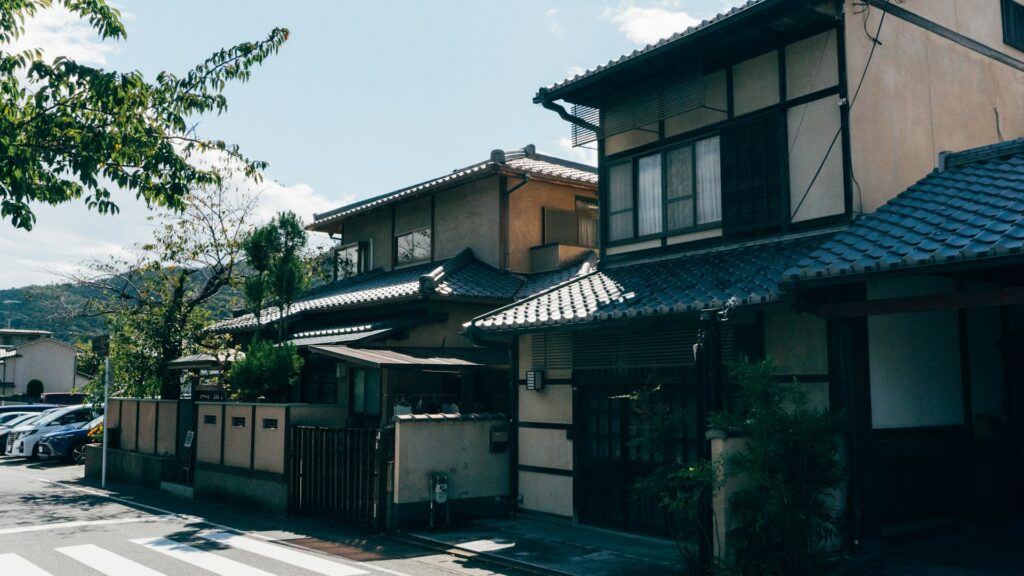
The OECD's housing stock statistics categorize countries into "single-family homes," "multi-unit housing (terraced houses, etc.)," and "apartment housing" and compare them.webfs.oecd.org.
Among them, Japan
- Detached house (single house)
- Apartment complex (condominium/apartment)
The ratio is relatively balanced, and the ratio of multi-unit housing (terrace houses, etc.) is less than 10% according to data from the first half of the 2020s.webfs.oecd.org.
``Streetscapes lined with long, narrow brick terraced houses'' like in England and the Netherlands are not very common in Japan.
Seismic design concept
Japan's Building Standards Law has required structural calculations that take earthquake forces into account since 1924, and earthquake-resistant design has been institutionalized from an early stage in the world.koike.g1.xrea.com.
The current standard is an earthquake-resistant design with the goal of not collapsing or collapsing even in a major earthquake with a seismic intensity of 6 to 7.pro sevenBy law, both wooden and reinforced concrete buildings are required to have the same level of earthquake resistance.
The wooden house is
- Because it is light, the seismic force is small (because the seismic force is determined by "the weight of the building x the acceleration of the shaking")
- Soft and deformable, easy to absorb energy
There are advantages such as this, and the reason why there are many two-story wooden buildings in Japan is due to the circumstances unique to earthquake countries.IISEE.
What are pencil houses that are increasing in urban areas?
Definition and reality of pencil house
Although there is no clear legal definition for the term "pencil house," the term "pencil house" generally has the following meaning in the real estate industry.
- Site area less than 50m2
- Long and narrow with a frontage of about 2 to 4 meters.
- 3-story wooden or steel frame structure
- There are many combinations of home + built-in garage.
It has been reported that these types of pencil houses account for approximately 10 to 20% of all newly built houses in central Tokyo, and there are also reports that the proportion of newly built three-story houses on long and narrow lots has been increasing since 2018.linkedin.com.
Why are there so many pencil houses?
The reason is simple: ``Land is expensive.''
- Land prices are very high in urban areas
- Still, there is a need to live in a detached house.
- Subdivided and transformed sites are available on the market.
- In order to build to the limit of the regulations, the plan will be a long, three-story building.
In particular, when trying to achieve both sunlight exposure and total floor space within the constraints of diagonal lines on roads and diagonal lines on neighboring properties, a ``slender and tall'' shape becomes more rational.iibh.org.
Points of Pencil House from a self-renovation perspective
Things to keep in mind when DIYing a pencil house are:
- “Stairs” and “load-bearing walls” tend to line up vertically
→ Construction work to move the stairs tends to be quite large-scale due to the structure. - The exterior walls often directly touch neighboring houses, and adding windows or openings is likely to fall under fire prevention regulations.
- Structural calculations for 3-story wooden buildings are more strictly controlled than for 2-story buildings (removal of load-bearing walls and columns requires confirmation by a structural designer).
That's the point.
On the other hand, self-renovating the interior (wallpaper, flooring, fixtures, etc.) is a fun way to make good use of a long vertical space.
Differences between wooden houses and reinforced concrete houses and how to choose one
Image of a person choosing a wooden detached house
In Japan, the majority of houses are wooden detached houses. especially,
- Suburban detached house for child-rearing households
- Parents' home/two-family house in a local city
- Used houses that are compatible with self-build and self-renovation
The proportions are such that it can almost be said to be made of wood.iibh.org.
Reasons for choosing wooden construction:
- Construction cost is relatively low (there is a statistic that for the same size, the order of costs is RC > steel frame > wooden construction)archibook
- High degree of freedom in changing floor plans (especially conventional framework construction method)
- Goes well with the texture of wood and the “Japanese way of living”
The following points can be mentioned.
Image of a person choosing a reinforced concrete house
Reinforced concrete houses are a minority among detached houses, but
- A “stately house” built in a high-class residential area in the city
- Combination of store and residence
- Investment rental apartment
is often chosen as.
RC construction is
- Highly fire resistant
- Easy to improve sound insulation and heat insulation performance
- If properly maintained, it has a long service life (an advantage as an investment property)
Materials for real estate investors emphasize their ``long lifespan and low maintenance''.hokushinfudosan.co.jp.
on the other hand,
- construction cost is high
- It is easy to renovate the interior by moving the partitions, but it is very difficult to modify the structure.
- Even if you drill the holes yourself, there is a risk of cutting the reinforcing steel.
The degree of freedom of self-renovation tends to be lower than that of wooden construction.
Concept of structure and lifespan
In Japan, the average age for a detached house to be rebuilt is approximately 37 years.open house group.
This is thought to be due to the rapid pace at which lifestyles and values change, and the history of tax systems and real estate practices based on the premise of rebuilding, rather than a structural longevity.
In recent years,
- Long-term quality housing
- ZEH (Zero Energy House)
- Highly insulated and airtight housing
``Building houses that are meant to be used for a long time'' is being promoted as a policy, and an increasing number of studies are evaluating wooden houses as a stock that stores carbon (some estimates suggest that an average wooden house stores about 6 tons of carbon).science direct.
From a self-renovation perspective, it can be said that the option of ``repairing old wooden structures and using them for a long time'', rather than ``destroying them because they are old'', is becoming more environmentally rational.
Practical checkpoints for "reading Japanese housing" for those considering self-renovation
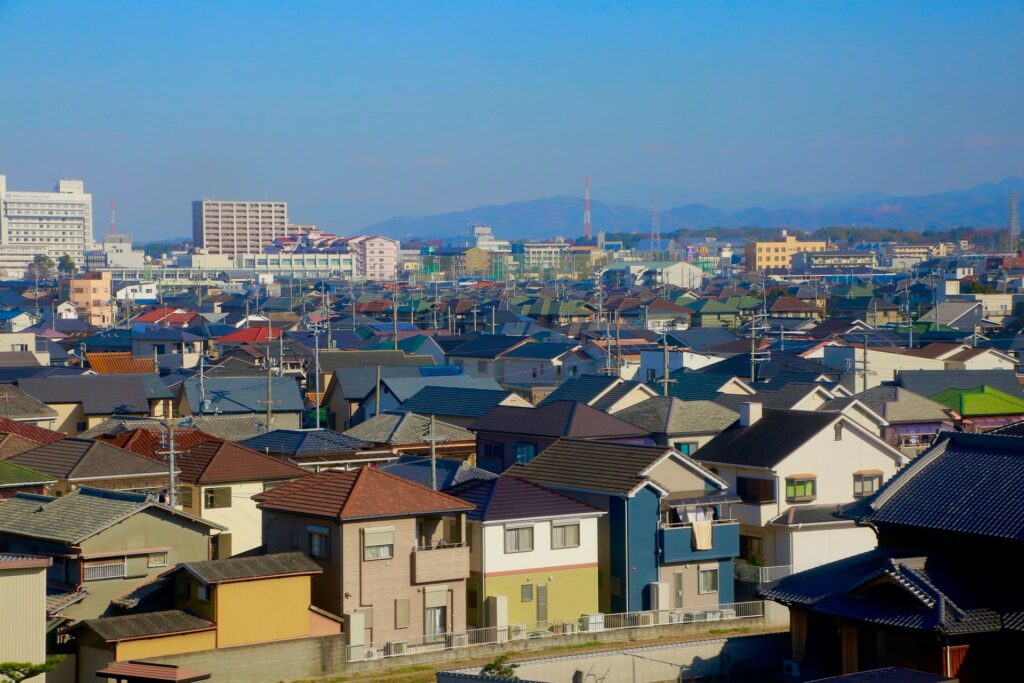
From here, we will summarize a simple check that will help you understand the ``premises of Japanese housing'' for those who are actually looking for a property or planning to renovate their home themselves.
Where to look in real estate advertisements to understand the structure
Property information usually includes the following notation:
- Structure: Wooden construction, lightweight steel construction, RC construction, SRC construction, etc.
- Number of floors: 2 or 3 floors above ground
- Zoning: Type 1 low-rise residential area, etc.
- Year of construction: Is it after June 1981? (Boundary of new seismic standards)
If you are a beginner in self-renovation, it is safe to start by thinking like this.
- "Wooden two-story building, new earthquake resistance since 1981"
→ Good compatibility with DIY and clear structural standards - "Wooden 3-story building"
→ Interior DIY is OK, but be sure to consult a structural designer when changing the floor plan. - "RC construction/SRC construction"
→ Adding large openings to walls and ceilings is basically no good. Thinking mainly about interior renovation
The reason behind the boundary between earthquake resistance standards (old earthquake resistance and new earthquake resistance) is that two-stage earthquake resistance design was introduced after 1981 due to revisions to the Building Standards Act and its enforcement ordinance.iibh.org.
Key points foreigners should keep in mind when renting or buying a Japanese home
For overseas readers, we will also clarify common gaps.
- The image that “wooden = weak” is not necessarily true in Japan.
→ Japanese wooden houses are designed with earthquakes in mind, and emphasis is placed on the performance of shear walls and metal fittings.IISEE. - Insulation performance is perfect even for a detached house
→ Strict insulation requirements similar to those in Europe have only recently been introduced, and comfort changes greatly depending on the age of the building. - Compact indoor dimensions
→ Door heights, stair steps, ceiling heights, etc. may be smaller than in Europe and America, so if you are tall, you will need to see the inside of the building in addition to drawings.
Understanding these points will make it easier to understand why this house is the way it is, and make plans for self-renovation.
The minimum line between DIY and the law
In Japan, the Building Standards Act exists as the "minimum standard for ensuring building safety."Japanese law translation. Even when doing self-renovation, the following points must be observed.
- Do not remove or cut important parts of the structure (columns, beams, load-bearing walls, foundations) without permission.
- In fire prevention areas and semi-fire prevention areas, there are restrictions on the specifications of exterior walls and openings.
- If the total floor area or purpose changes due to expansion or change of use, a confirmation application may be required.
vice versa,
- Interior finishing (wallpaper, painting, flooring overlay)
- fixtures and shelves
- Replacement of equipment (to the extent that legal notification is not required)
Construction work such as this is an area that is easy to get involved in with self-renovation.
Summary: Understanding Japanese housing will make self-renovation much more enjoyable
A rough summary of what has been said so far is as follows.
- The main character of Japan's detached houses is the wooden two-story building.
- Approximately 90% of the houses are made of wood, and historically strict standards have been applied to protect against earthquakes.
- In urban areas, elongated three-story wooden structures like "pencil houses" are on the rise.
- A type of housing unique to Japan that was born amid high land prices and legal restrictions.
- Reinforced concrete houses are in the minority when it comes to detached houses, but some people choose them for reasons such as long life, fire resistance, and sound insulation.
- There is a strong need for investment condominiums and luxury homes.hokushinfudosan.co.jp.
- Compared to Europe and America, Japanese houses have a bipolar structure of "wooden detached houses + RC condominiums", and the floor space per person is compact.
- This has given rise to a culture of pencil houses and tiny houses.E-Housing.
- When planning a self-renovation project, it is important to understand the premises such as structure, regulations, and year of construction before planning.
- It is particularly difficult to modify the structure of three-story wooden buildings and reinforced concrete structures, so collaboration with experts is a prerequisite.
If you understand Japanese houses as ``earthquake country-spec houses with some quirks,'' your approach to self-renovation will change.
Even for people from overseas, Japanese wooden houses are ``light and flexible, and if properly maintained, can be lived in for a long time.'' By combining insulation renovation and seismic reinforcement, they can also become a testing ground for sustainable living.
If you are thinking about self-renovation,
- First, check the structure, number of floors, and year of construction in real estate advertisements.
- While looking at the drawing, get a rough idea of where the bones are and where the meat is.
- Prepare an introductory book on laws and structures + your favorite DIY tool set
If you start with this three-piece set, your relationship with a "Japanese home" should become much clearer.
If you're wondering "How much renovation or remodeling can I actually do on my own home?" or "Where should I even start?", please visit this page. If you're looking to learn more about specific renovation processes or construction details, don't miss this page as well!
See you in another article.
References/Reference sites (titles omitted)
*In no particular order. Links are to the original author/publisher's copyrighted work, so if you are interested, please check out the original source.
- Statistics Bureau, Ministry of Internal Affairs and Communications “Housing and Land Statistical Survey 2023”e-Stat
- Ministry of Internal Affairs and Communications, Housing and Land Survey 2023, Table 2 “Dwellings by Type of Building, Construction Material and Stories of Building”e-Stat
- “Building Control in Japan” by the Ministry of Land, Infrastructure, Transport and Tourism, Japan Building Center and othersiibh.org
- Tomohiro, M. H. “Introduction to the Building Standard Law”koike.g1.xrea.com
- OECD (2024), “HM1.5 Residential stock by dwelling type”, OECD Affordable Housing Databasewebfs.oecd.org
- CBL, “A Quick Look at Housing in Japan” (2024)CBL
- e-housing.jp “What a Typical Japanese Home Really Looks Like” (2025)E-Housing
- Yamashita, N. et al. “An interlinked dynamic model of timber and carbon stocks in Japan’s buildings” (2024)science direct
- Archi-book.com “Detached Residence Construction Cost in Japan 2021”archibook
- Hokushin Real Estate “Why Reinforced Concrete (RC) Residential Building is…”hokushinfudosan.co.jp
 English
  Japanese
Leave a Reply
You must be logged in to post a comment.