
Hello everyone, this is DIY Renova.
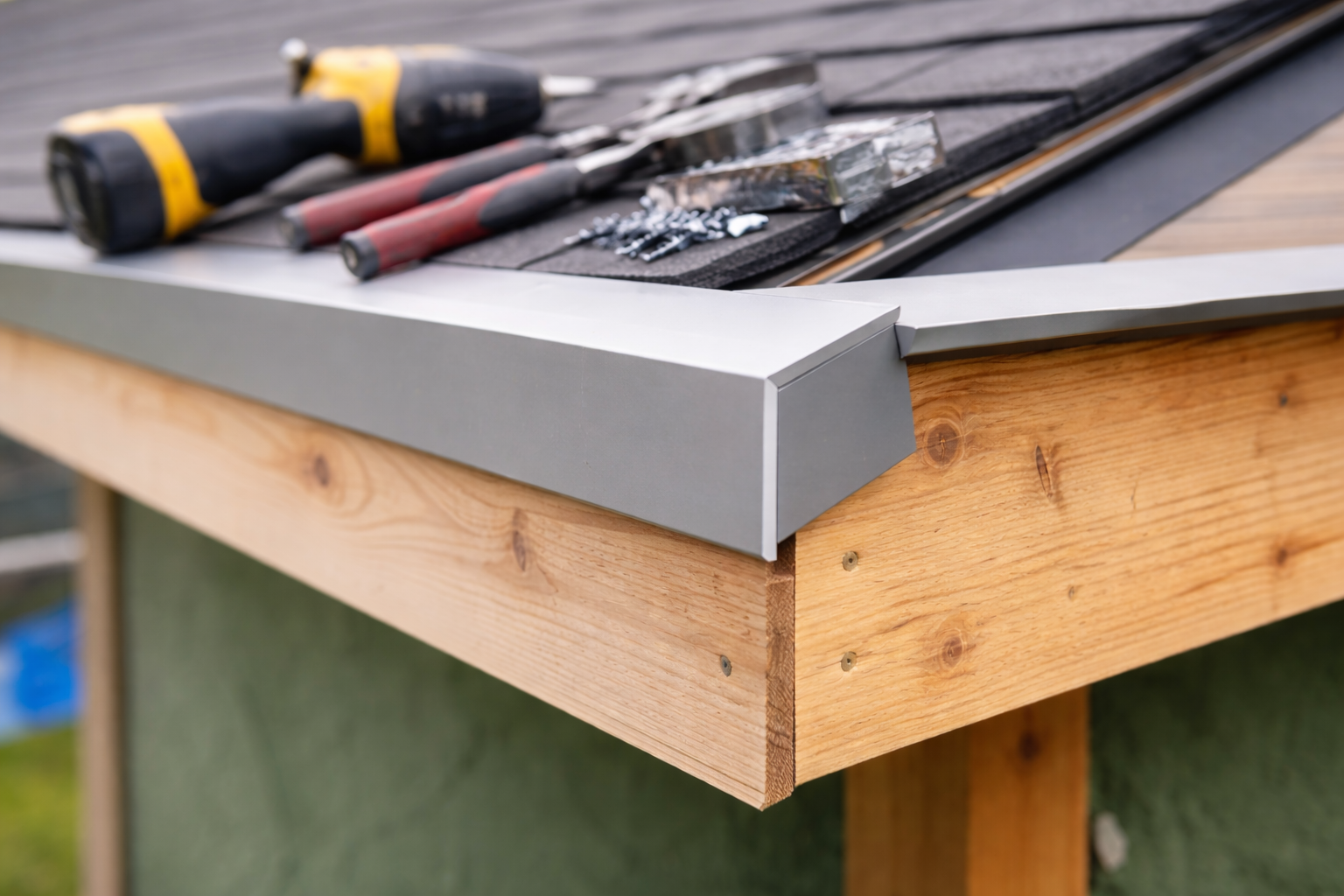
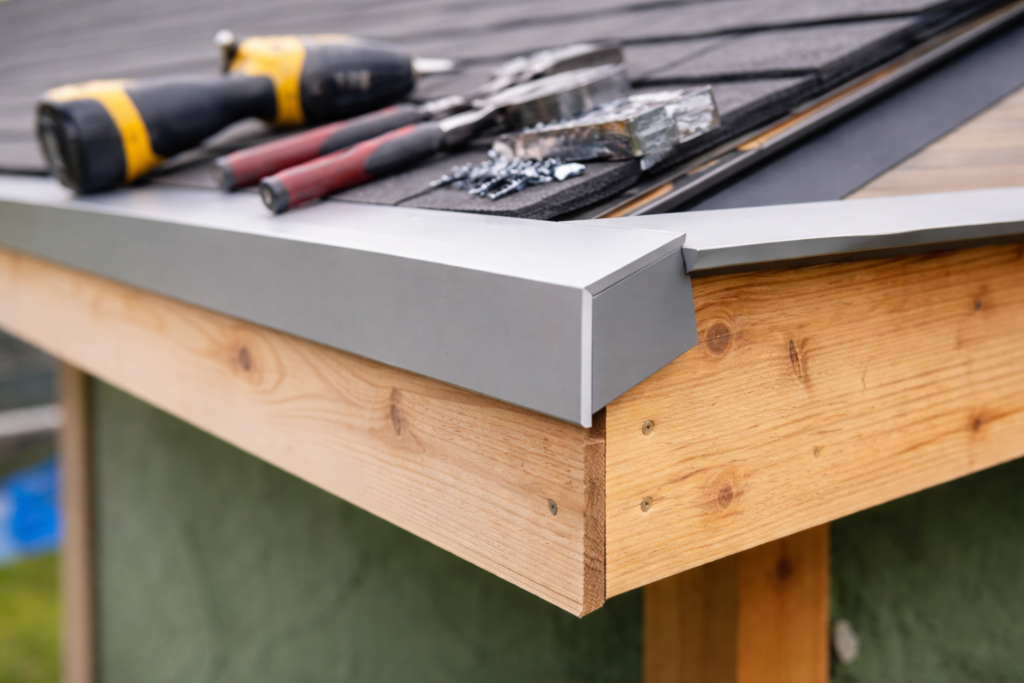
When wrapping a gable board (also called a fascia) with a metal plate such as galvalume steel plate, people tend to think, ``What you see is metal, so it doesn't matter what kind of wood it is inside, right?'' However, if you are aiming for a long lifespan of 100 years or more, this approach is risky.
This is because even if a gable wrapped in metal plates is strong on the outside, if the inside (base) is weak, the deterioration will progress in places you can't see, and eventually the outside will get caught up and cause problems. This article does not focus on the construction procedure, but focuses on ``how to choose the base gable board,'' and will break it down to a level that even beginners will not have trouble making a decision.
If you're wondering "How much renovation or remodeling can I actually do on my own home?" or "Where should I even start?", please visit this page. If you're looking to learn more about specific renovation processes or construction details, don't miss this page as well!
Information on updates to this website will be delivered to you once a month.NewsletterIf you are interested, please register.
Please note that this document is not necessarily accurate, and should be used as reference information only.
So, here you go.
Conclusion on choosing gable boards: “Moisture and health” determine lifespan more than tree species
There are many conditions that cause wood to rot, but the one that can realistically be controlled in a house is moisture. Research into rot risk assessment for wooden houses also concludes that temperature and air quality are difficult to control, and as a result, ``controlling moisture'' is important.J-STAGE
Furthermore, as a guideline for the moisture content, technical documents from the Forestry Agency explain that ``When the moisture content is 20% or less, the activity of decaying fungi is suppressed, making it difficult to rot'' and ``the fiber saturation point is approximately 30%.''Rinya
In other words, when choosing a gable board, the dominant consideration is whether the wood will not get wet, will dry even if it gets wet, and will not have high moisture content, rather than whether it is made of cypress or not.
Be the first to know about the “invisible failures” that tend to occur with gables wrapped in metal plates
If you make the wrong choice, mistakes like this will occur.
Failure 1: The base is rotten, causing the metal to wave or float.
As the underlying wood softens, the holding power of screws and nails decreases, and the metal sheet metal begins to move ``slightly''. You may not notice it at first, but on windy days or when the temperature expands and contracts, the misalignment increases and the seams become loose.
Mistake 2: Preservative and anti-termite treated wood can accelerate metal corrosion.
This is often overlooked when doing DIY, but it's important. A research review states that when preserved wood gets wet with rainwater or condensation and comes into contact with metal parts, metal corrosion and the secondary waterproofing layer can be affected.J-STAGE
Furthermore, corrosion tests involving contact between steel plates and preservative-treated wood have shown that significant corrosion occurred when the steel plate was combined with copper-based preservative (CUAZ-based) treated wood in the absence of insulation.J-STAGE
There are cases where the intention of ``using a preservative to make it last longer'' ends up shortening the lifespan of the metal.
Mistake 3: The area under the eaves is difficult to wash with rain, and dirt and salt remain, leading to corrosion.
A cautionary note has been issued regarding plated and painted steel sheets: corrosion-causing substances may not be washed away and become concentrated under eaves, where rain is less likely to occur, and corrosion may progress.Nippon Steel Corporation
Gables tend to be a zone where rain doesn't hit them easily, but moisture and dust tend to accumulate. Choose this based on this.
First, judge: Conditions under which the existing (more than 30 years old) gable base can be reused.
While the skeleton is being dismantled, it is the ``best chance of a lifetime'' to touch the gable foundation. If you compromise here, you'll likely have to redo the scaffolding and sheet metal later, so if you're aiming for 100 years, you'll want to set stricter criteria.
Conditions that are likely to be reused
- The wood end (end) is hard (even if you apply a tool, it won't penetrate easily)
- The darkening is only on the surface, and when scraped, healthy wood comes out.
- There is less warping and twisting, and straight lines appear.
- Nails and screws work well (no spinning)
- If possible, keep the moisture content low (20% or less is a safe guideline)Rinya
Conditions for recommended replacement
- Soft, powdery, fibers crumble (typical of decay)
- The end of the wood is worn out (the end of the wood absorbs a lot of water and deteriorates easily)J-STAGE
- You can visually see the warpage (you can see the sheet metal waving in the future)
- There is evidence that water has already circulated (e.g. at the joints of the mortar base)
The point here is not that "wrapping with metal = hiding it," but that "wrapping it with metal also carries the risk of making it harder to dry." Confining slightly damaged wood tends to be a losing strategy as a long-life strategy.
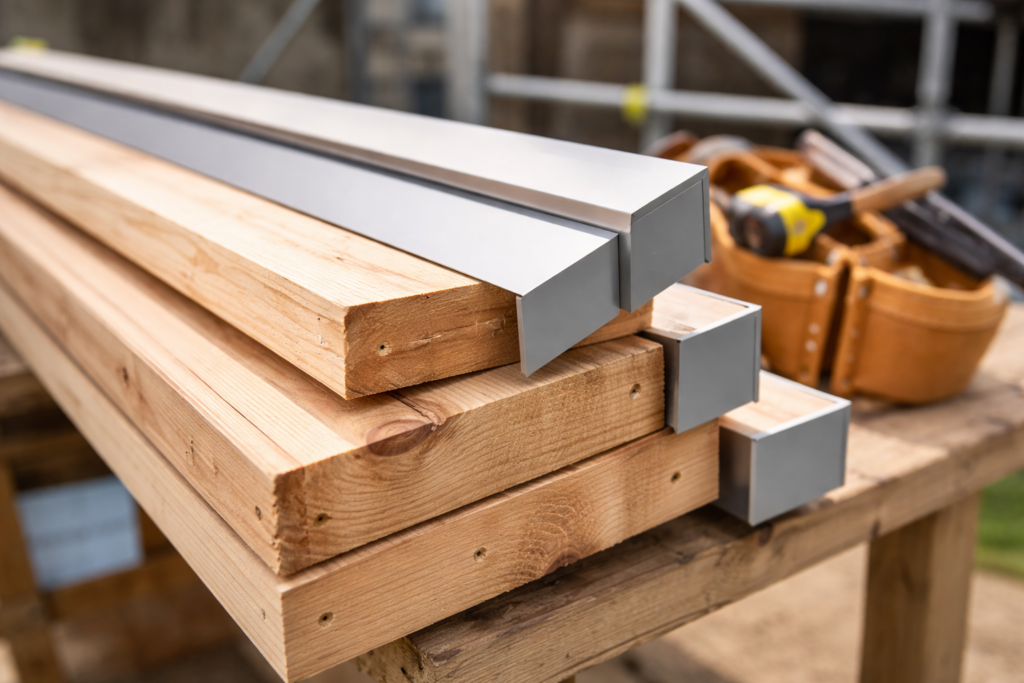
If you are installing a new one: Is cypress necessary? What is the optimal solution?
Cases where choosing cypress is worth it
- I have high hopes for the decay resistance of the wood itself.
- A design in which some moisture is unavoidable at the joint and surrounding areas (however, this is not a matter of "selection" but rather "composition design", so don't be too confident)
However, when it comes to wrapping it in metal, the value of cypress is often determined not by the strength of the tree species but by the fact that it is easy to obtain good quality wood (less warped, dry, highly processed). The reality is that it will last 100 years, not because it is made of cypress, but because it has a composition that has a good moisture history + a healthy base.J-STAGE.
Realistically strong option for aiming for 100 years
From here on, select by ``specifications'' rather than ``tree species.''
Option A: Untreated dry wood (KD wood) + on-site treatment only where necessary
- Advantages: Easily minimize metal corrosion risk (copper-based preservatives)
- Disadvantage: If the cut surface (cut edge) is handled roughly, the life will be shortened at once.
It is known that the end of the wood absorbs a lot of water and is prone to deterioration.J-STAGE
Option B: Pressure preservative/termite-proofing material (if used, manage as a set including “compatibility”)
- Advantages: Easy to increase the durability of the wood side
- Disadvantages: Some types of preservatives have been shown to increase metal corrosion (copper-based products such as ACQ/CUAZ can cause stronger corrosion).J-STAGE.J-STAGE.
In this case, it is necessary to include "insulation with metal (butyl tape, etc.)" in the selection conditions (an example of corrosion becoming noticeable without insulation is shown).J-STAGE
This is not so much a matter of "construction" as it is a "required prerequisite if the material is to be adopted."
Option C: Is laminated wood an option?
Glulam for outdoor areas depends on the environment and product grade. Wrapping it in metal can prevent UV deterioration, but there is a risk of damaging the adhesive layer if moisture gets around. If you are aiming for 100 years, it is safe for beginners to choose ``solid dried wood'' as their first choice.
How to determine dimensions: Width is determined by “fitting” rather than “appearance”
The width (apparent width) of a gable board is actually determined by the following three factors, even if the outside is wrapped in metal.
- Existing eave configuration (rafter end, field, fascia position)
- “Folding/covering allowance” for the metal plate that will be wrapped from now on
- Relief from interlocking parts (drainers, eaves ceiling materials, top of exterior walls)
The important thing here is that ``matching the actual item'' is reasonable. If you decide based on numbers alone, the metal sheet may end up being bent unreasonably on site, or the cover may not be sufficient.
How to decide for beginners (selection steps)
- Step 1: Measure the visible dimensions of the existing gable base
- Step 2: Add the necessary “folding” when wrapping with metal sheet metal
- Step 3: Check that there is no interference with the eave ceiling and exterior wall.
- Step 4: Is it possible to obtain materials of the same width? (Determine the practical solution based on availability)
At this stage, you often find out that the width you want is not available at the standard home improvement stores. For the first time, ordering from a lumber shop (specifying width and thickness) becomes an option.
The person who chooses the material with the least amount of warping and twisting will win (ascertainment at the store)
With metal-wrapped gables, a slight warp in the base will result in a wavy appearance. So what you have to do at the time of purchase is simple.
- Place the wood on the floor and check the warpage in the longitudinal direction.
- Peek over the edge and see the twist
- Avoid concentrating knots and grains that are likely to crack
- If possible, give priority to dry wood (KD) description (increases the possibility that the moisture content is stable)
If you are aiming for 100 years, the best thing to do is not to compromise here.
For those who are unsure whether to use preservatives: Include compatibility with metal as a “selection condition”
This is directly related to "I don't want to compromise," so I'll write it a little closer to engineering.
- It has been reported that corrosion is accelerated when wood preservatives (especially copper-based) come into contact with steel plates.J-STAGE.
- There have also been cases where the combination of materials treated with copper-based preservatives in the absence of insulation led to severe corrosion.J-STAGE
Therefore, when choosing a preservative, the following conditions should be considered.
- Is there a premise that "insulating material" can be inserted between metal and wood?
- Whether the preservative used is copper-based (copper-based ones tend to require caution)J-STAGE
- Consider measures to prevent dirt and salt concentration (cleanability) in areas that are not easily exposed to rain.Nippon Steel Corporation
This is not about the construction procedure, but about the conditions under which the material can be used. If the conditions cannot be met, it is reasonable to change the material (such as choosing untreated KD material) as a long-life strategy.
Size selection and standards for gable plates used in metal plate wrapping
Conclusion: When in doubt, use ``180mm'' as a standard, ``210mm'' for peace of mind, and ``240mm'' for insurance (you can buy it with this ruler first)
First, the answer to "What mm should I buy before measuring?" Even in the Japanese distribution standards, gables and fascia materials are divided into stages such as 150/180/210/240, and the general solutions at the site are concentrated in this zone (e.g. distribution of gable boards with a width of 180 mm, lineup of 150/180/210/240, etc.) (Miura Seizai, n.d.; Cainz, n.d.).Miura sawmill.
If the situation is to remove all existing eaves and gables and rebuild, existing wraparounds such as mortar can be reset. That's why it is realistic to choose it in the next "How to make a new eave" section.
- Showing the rafters (no eaves attached/only thin cutouts)
"150-180mm" is likely to be established. - Boxed eaves (pasting the eaves. Ventilation and parting materials are included)
"180-210mm" is the basic range - Strong winds, large steps in the eaves, thick ventilation layer, thick parting material/I'm confused.
It is less likely to fail if you set it to ``210mm'' or ``240mm'' (less disadvantages of being ``too big'')
If you choose one "safety line" here, this is the one that will be the most secure from a DIY perspective.
- Minimum safety: 180mm
- Don't worry if you're unsure: 210mm
- I'm worried about on-site alignment/I want to get insurance for the first time: 240mm
The reason is simple: Metal wrapping requires folding and drainage at the top and bottom edges, and if you add a boxed eave, there will be more parting, ventilation material, and fixed base material at the bottom, which will quickly increase the number of items you can find. The concept of establishing features such as eaves drains and ventilation/drainage is also organized in the design guidelines for the ventilation base roof construction method (eaves drains, facilities that allow ventilation/drainage, etc.) (National Institute for Land and Infrastructure Management [NILIM], 2017).National Institute for Land and Infrastructure Management, Ministry of Land, Infrastructure, Transport and Tourism
In addition, for materials such as scaffolding boards or materials with unknown KD, where the wood is expected to move later, the last-minute dimensions are more likely to cause the sheet metal to lift or wave, so it is safer to find a larger size.
What is measured by "first actual measurement"? How to determine the “necessary finding” that can be completed with one measurement (decided in mm)
Even though it is called "actual measurement", it is not difficult. If you are removing the entire exterior, you will only need to measure one piece.
This is what we measure.
“Vertical step” from the top of the roof (the top line of the roof board) to the bottom line of the eave you are creating”
This is the "height that must be hidden" = core dimension for metal wrapped gables. If you are going to make a box eave, you will need to make a line on the bottom of the eaves, so you can measure this.
Procedure (at the material level so that even amateurs can reproduce it)
- Dismantle the area around the gable so that the tips of the rafters and the position of the field boards can be seen.
- Mark the top surface position of the roofing board (roof base) as a “reference line” with an insert or pencil.
- If you are going to put up an eaves ceiling, temporarily place the eaves base (receiving material for the edge and parting) and decide on the "eaves bottom line".
- Measure the vertical distance between 2 and 3 with a scale → This is the "required cover height"
This is the “main body”. Add the "margin necessary for the metal wrapping" here.
Margin to add (this is the measuring stick)
- Margin for folding sheet metal and draining: Total 30mm (image of top 15 + bottom 15)
- Escape from interference: 10mm
- DIY error insurance: 5mm
Just add the total "45mm".
In other words, in conclusion,
Finding the required gable board (estimate) = (step you measured) + 45mm
This "+45mm" is a value rounded to the safe side for DIY, based on the concept of "draining water and draining" with accessories such as eaves drainers (eaves drainers, accessories that allow ventilation and drainage) (NILIM, 2017).National Institute for Land and Infrastructure Management, Ministry of Land, Infrastructure, Transport and Tourism
Furthermore, there are examples of standard rafter dimensions used in conventional wooden structures such as 45 x 45 (local government standard drawings), and cases where the dimensions are 45 x 60 to 45 x 75 or even larger are also organized (Tsu City, n.d.).Tsu city information
Therefore, determining the location based on "step + 45mm" is a method that is difficult to remove even if the rafter dimensions are slightly different.
One last important note. If preservative/termite-proof treated wood (especially copper-based wood) is used as a substrate, the plated steel plate or painted steel plate may corrode in a short period of time, so caution is advised to insulate the contact area with roofing, etc., and create a structure that prevents rainwater and condensation water from flowing into it (Nippon Steel Coated Sheet Corporation, n.d.; JFE Steel, n.d.; FineSteel, n.d.).Nippon Steel Information Systems.JFE Steel Tube.
Although this is not the "gable board size" itself, it is an essential condition for making metal-wrapped gables last long, so keeping this in mind will reduce accidents.
The shortest thickness standard is ``24 mm is standard, 30 mm is safe, and 18 mm is avoided.''
This is the main topic. Thickness of metal plate-wrapped gables has three main effects:
- Effect of fasteners (nails/screws)
- “Ease of surface appearance” of the base (sheet metal does not wave due to warping)
- Difficulty in denting and floating when sheet metal hits
The reality of distribution in Japan is that gable boards with a thickness of 24 mm are sold as standard (24 mm thick x 180/210 wide gable boards are commonly sold at Cainz, Komeri, etc.) Joyful Honda Order & Store Pickup. Cainz. Online shopping site for Komeri, the home improvement center with the largest number of stores in Japan. Komeri.com.
Therefore, it is best to decide on a DIY measuring stick like this.
A yardstick for conclusions (all you need to remember is this)
- First standard established: Thickness 24mm
- Strong winds/I want to expose a long surface/I want to reduce the waviness of sheet metal: Thickness 30mm
- Avoid using 18mm plates (e.g. 12-18mm plates) (the plate will stand out if it moves after wrapping)
What you said, "I want to go from 25mm to 30mm" is a "safe change" for metal packaging applications. On the other hand, 24-25mm is the standard range, so you don't have to be too nervous about it (24mm is the most widely distributed lens, so 24-30mm is the practical range).
“Engineering basis” when determining thickness (form that even amateurs can judge)
Once the thickness has been determined, the standard specifications for public works state that the length of the fastener should be at least 2.5 times the thickness of the board (the length of the nail should be at least 2.5 times the thickness of the board to be nailed). Ministry of Land, Infrastructure, Transport and Tourism
If you apply this to the gable board, you will automatically get a guideline for the minimum number of fasteners.
- If the thickness is 24mm: The nail (or screw that works on the wood base) should be 60mm or more in length (24 x 2.5 = 60) Ministry of Land, Infrastructure, Transport and Tourism
- If the thickness is 30mm: "75mm or more" is the standard (30 x 2.5 = 75)
A common DIY mistake is that even though the board is thick, the fasteners are too short and don't work well with the base. If you increase the thickness, please update the length of the clasp as a set.
How about “25×105mm” as a gable board?
25 x 105mm is not a problem in terms of thickness. Rather, 25mm thickness is the standard range. The problem is not the thickness, but the width (height).
- There are many cases where it is difficult to find the perfect gable board for 25 x 105 pieces.
- However, if you use 25 x 105 as a "core material (straight base material)", make the missing height with another material, and then wrap it with sheet metal, it is very realistic.
At this time, be careful if you use antiseptic or anti-termite treated materials (especially copper-based materials). If wood treated with a copper-containing treatment agent comes into contact with a steel plate and moisture such as condensed water is present, the steel plate will corrode in a short period of time, so caution is advised to insulate the contact area with a roofing etc. and create a structure that prevents rainwater and condensed water from flowing in (Japanese Steel Sheet Alert, industry document). Nippon Steel Information Systems.Fine Steel.
In other words, the way you think about the sandwiching sheet changes depending on whether you use treated wood or not, before considering the thickness.
Where to buy: Home center or lumber store?
The base of metal-wrapped gables tends to be long, have zero warpage, and have severe dimensions. The next decision on where to purchase is quick.
For home centers
- Standard dimensions are sufficient
- You can look at the actual product and choose the one with the least amount of warping.
- Some knots are acceptable
Suitable for lumber stores
- The width, thickness, and length you want are different from the standard.
- I want to reduce warping as much as possible (it is worth paying for the quality of the material)
- Aiming for 100 years, I would like to consult with you about the handling, drying, and quality of the wood.
If you have a chance to buy a skeleton, it's worth visiting a lumber store to see if they can get straight lumber of the same size.
Reduce mistakes with tools: Examples of items that are effective in selection
- "Wood moisture content meter"
This goes well with the idea that 20% or less is a good guideline.Rinya. - "Choshaku (long ruler) or thread"
You can check warpage in an instant. - "A sharp, thin driver"
For checking the soundness (hardness confirmation) of wood ends and suspicious parts.
Frequently asked questions (only how to choose)
Q1. Will it last 100 years if I make it from cypress?
It is possible that good quality cypress wood can be obtained easily, but what determines 100 years is its "good moisture history" and "sound base." Moisture control is also considered important when evaluating decay in wooden houses.J-STAGE.
Q2. Existing materials that are over 30 years old are in a bit of a bad condition, but if I want to wrap them, can I reuse them?
If you are aiming for 100 years, we recommend replacing it if you are unsure. The reason is that if subtle decay is contained, there is a risk that it will progress under conditions that are difficult to dry (emphasis is placed on the relationship between decay and the moisture environment).J-STAGE
Q3. Is it safe to use it as a preservative?
While it is easy to increase the durability of wood, it has been shown that depending on the type of preservative used, metal corrosion may become stronger.J-STAGE.J-STAGE.
If you choose to use it, please select materials that include insulation from metal.J-STAGE
Q4. How do you decide the width?
It fits better than it looks. Determine by existing dimensions + folding of metal + escape of joint. If it doesn't fall within the standard dimensions, ordering it from a lumber shop is the real solution.
Summary: Priority of “uncompromising” selection method aiming for 100 years or more
Finally, I will briefly summarize the priorities.
- The base is healthy (no rot, softness, or wood grain deterioration)
- Less warping and twisting (controls appearance and fit of sheet metal)
- Select on the premise that the moisture history will not deteriorate (moisture content of 20% or less is a safe guideline)Rinya.
- If you use a preservative, consider its compatibility with metal corrosion as a selection criterion.J-STAGE.J-STAGE.
- The area under the eaves is not likely to be washed away by rain, so take into consideration the accumulation of dirt and salt.Nippon Steel Corporation
If you're wondering "How much renovation or remodeling can I actually do on my own home?" or "Where should I even start?", please visit this page. If you're looking to learn more about specific renovation processes or construction details, don't miss this page as well!
Information on updates to this website will be delivered to you once a month.NewsletterIf you are interested, please register.
Well, then!
References/Reference materials (respect)
- Hiroaki Saito (2020) Commentary related to National Institute for Land and Infrastructure Management's "Guidelines for measures against deterioration of wooden houses" (decay and moisture environment, importance of moisture control, test examples of preservation treated wood and steel plate corrosion)J-STAGE
- Akira Makita (2016) Pressure preservation treatment method for wood and wood materials (differences in types of preservatives and metal corrosiveness)J-STAGE
- Forestry Agency materials (wood moisture content, resistant to rot below 20%, guideline for fiber saturation point, etc.)Rinya
- Winandy & Morrell (USDA Forest Service, 2002) Background explanation of wood decay and the 20% moisture content guidelineForest Products Laboratory
- Nippon Steel materials: Be careful of corrosion in areas that are not easily exposed to rain (under eaves, etc.)Nippon Steel Corporation
- FineSteel. (n.d.). Contact corrosion of painted/galvanized steel sheets and how to prevent it [PDF]. https://www.finesteel.jp/docs/isyukinzoku.pdf
- JFE Steel Corporation. (n.d.). Product information [Corrosion mechanism]. Retrieved December 30, 2025, from https://www.jfe-kouhan.co.jp/products/mechanism.html
- Miura Seizai Co., Ltd. (n.d.). Fascia/Gable. Retrieved December 30, 2025, from https://www.miura-seizai.co.jp/13hanakakushi.html
- National Institute for Land and Infrastructure Management. (2017). Chapter X: Design and construction guidelines for ventilated base roof construction methods (draft) [PDF]. https://www.nilim.go.jp/lab/hcg/buildingdepartmentwebsite/chap10honbun.pdf
- Nippon Steel Coated Sheet Corporation. (n.d.). Precautions when using plated/painted steel sheets. Retrieved December 30, 2025, from https://www.niscs.nipponsteel.com/products/kohan/notice-steel.html
- Tsu City. (n.d.). Wooden standard drawing (conventional frame construction method) (1) [PDF]. Retrieved December 30, 2025, from https://www.info.city.tsu.mie.jp/www/nyusatsu/data/4290612ykn/21/zu02.pdf
- Cainz. (n.d.). Cedar KD material gable board width 180mm length 3650mm thickness 24mm [SU]. Retrieved December 30, 2025, from https://www.cainz.com/g/2200224111102.html
- Ministry of Land, Infrastructure, Transport and Tourism. (2022). Public building wooden construction standard specifications [PDF]. https://www.mlit.go.jp/gobuild/content/001472630.pdf
- Cains. (n.d.). Cedar KD material gable board width 180mm length 3650mm thickness 24mm [SU]. Retrieved December 30, 2025, from https://www.cainz.com/g/2200224111102.html
- Komeri. (n.d.). Cedar gable board green planer 3650×180×24mm. Retrieved December 30, 2025, from https://www.komeri.com/shop/g/g837117/
- Komeri. (n.d.). Mail order price of gable board | Home center Komeri.com. Retrieved December 30, 2025, from https://www.komeri.com/shop/c/c233213_dD/
- Joyful Honda. (n.d.). Joyful Honda's wood special feature. Retrieved December 30, 2025, from https://joyfulhonda.jp/sc/mokuzai.html
- Nippon Steel Sheet Co., Ltd. (n.d.). Precautions when using plated/painted steel sheets. Retrieved December 30, 2025, from https://www.niscs.nipponsteel.com/products/kohan/notice-steel.html
- JFE Steel Corporation. (n.d.). Product information [Corrosion mechanism]. Retrieved December 30, 2025, from https://www.jfe-kouhan.co.jp/products/mechanism.html
 English
  Japanese
Leave a Reply
You must be logged in to post a comment.