
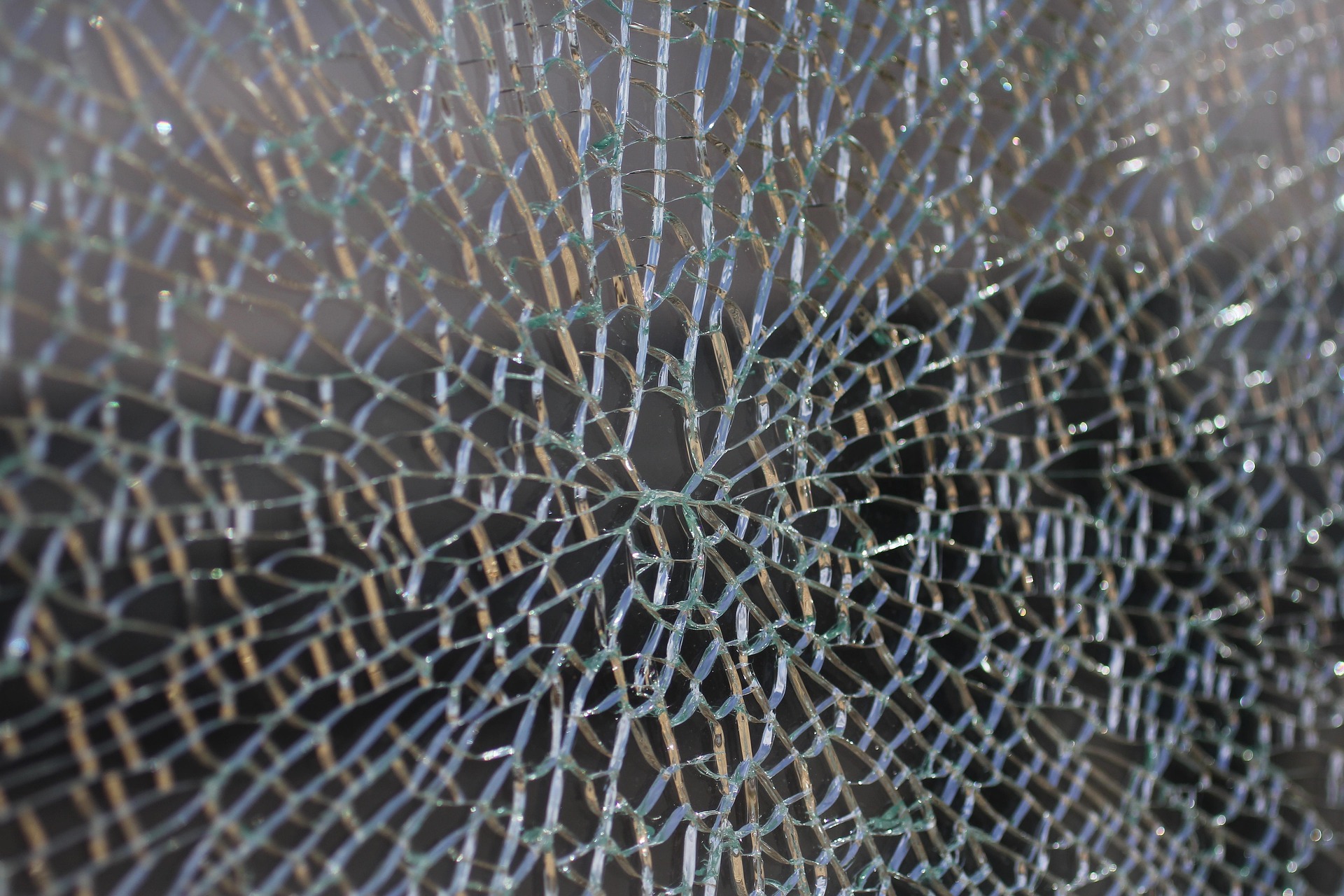
How to deal with broken windows
There are times when you break something, right?

Introduction: When it comes to broken glass, "safety confirmation" and "correct sorting" are the top priorities.
At self-renovation sites, glass can break due to slight carelessness or contact with tools. Handling broken windows not only poses a high risk of injury, but you also have to follow the municipality's garbage separation rules, and if you do it incorrectly, it may not be able to be collected or you will have to deal with it again. In Japan, it is generally recommended that broken plate glass be disposed of as "non-combustible garbage (hazardous material)" wrapped in cardboard, etc. and clearly marked as "dangerous" or "contains glass" (statement on the local government page; expressions common to public information in Nagoya City, Setagaya Ward, Hiroshima City, etc.)Nagoya City +2 Setagaya Ward Homepage +2.
In addition, some local governments consider plate glass to be non-flammable garbage, and require that glass be pasted diagonally with duct tape to prevent it from scattering (this is treated as rough depending on the size.This article is based on a ``universal method that generally follows Japanese local government rules'' and prioritizes safety.This is a basic principle that also applies to people overseas, so if you are disposing of glass outside of Japan, be sure to check the local government guidelines for the same idea.
Please note that this article is limited to the topic of "treatment of broken windows" and does not cover construction details such as replacement or insulation renovation. I will leave the selection and installation of new glass to a separate article.
If you're wondering "How much renovation or remodeling can I actually do on my own home?" or "Where should I even start?", please visit this page. If you're looking to learn more about specific renovation processes or construction details, don't miss this page as well!
Information on updates to this website will be delivered to you once a month.NewsletterIf you are interested, please register.
Please note that this document is not necessarily accurate, and should be used as reference information only.
So, here you go.
Initial response immediately after an accident: Protect people and the scene first
It is strictly prohibited to rush and touch it with bare hands the moment you notice that it is broken. Our top priority is ensuring safety.
- Ensure the safety of your feet Don't move around in socks or slippers; change to shoes with thicker soles. Keep people and pets away.
- ``Emergency measures to prevent scattering'' If debris remains on the window frame, apply packing tape in a grid pattern (preferably diagonally x + vertically and horizontally) to prevent it from falling and scattering. Some local governments in Japan recommend this type of pasting (for the safety of workers and collectors).
- "Primary collection of debris" Wrap large debris in thick paper or cardboard, and collect small debris with a broom or dustpan. You can reduce the amount left behind by collecting minute pieces with wet kitchen paper or adhesive tape. Double the bags, and mark "Glass" and "Dangerous" clearly on the outside (recommended by several local governments).Nagoya City +2 Setagaya Ward Homepage +2.
If you do the "first five minutes" carefully, your subsequent work efficiency and safety will go up by leaps and bounds.
Types and behavior of glass: Tips for removing and processing will change
The correct answer for processing varies slightly depending on the type of glass. At the very least, keep the following in mind to avoid making mistakes in judgment.
- Ordinary glass (float glass) The most common type of flat glass. When broken, it tends to break into sharp pieces, so wrap it in cardboard and dispose of it as non-burnable garbage. We will display danger signs in accordance with local government rules.Setagaya Ward homepage.
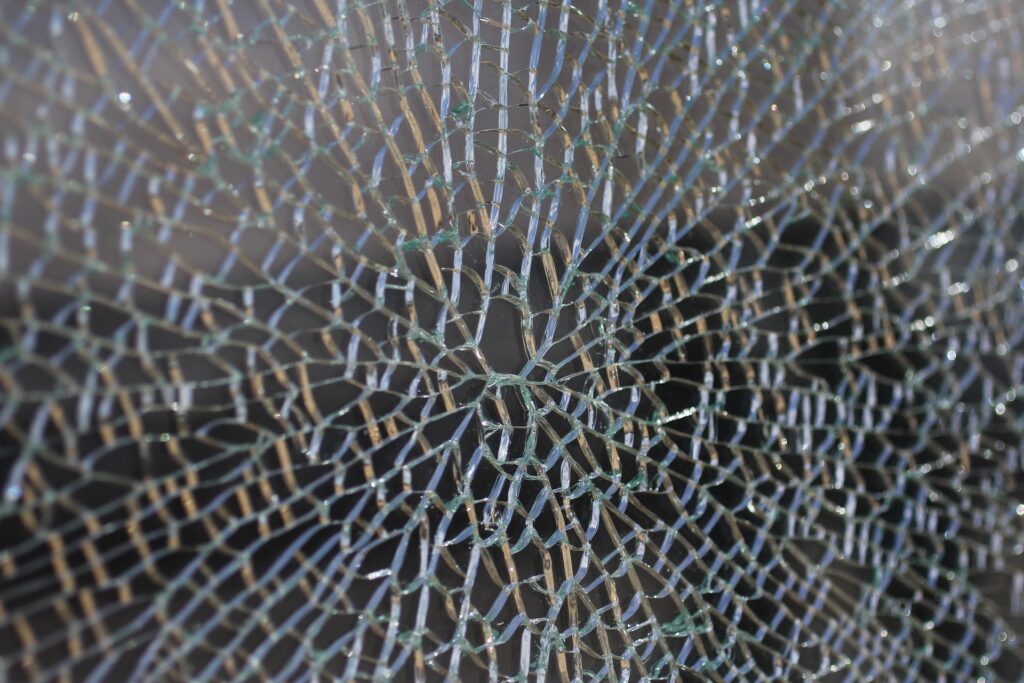
- Tempered glass The entire surface of the glass shatters into fine particles, making it easy to scatter powder (in engineering terms, it means that the surface is coated with compressive stress, and when it breaks, the stress balance is disrupted and it instantly breaks into particles). It is recommended to wear a mask and safety glasses when processing, and be sure to double bag. This crushing behavior is also explained in JIS standards and industry documents.Ministry of Land, Infrastructure, Transport and Tourism +1.
- The original purpose of wired glass was ``for fire prevention to suppress the spread of fire.'' Contrary to its appearance, it has the same impact resistance as regular glass, but may break. Since the wire remains and is difficult to separate, it may be safer to handle it as a set with the frame instead of trying to forcefully remove "just the glass" (industry document regarding misunderstandings of fireproof properties and strength)itakyo.or.jp+1.
- Double glazing (including double glazing/Low-E) A sealed structure in which two sheets of glass are bonded together using primary and secondary sealants at the factory. It is basically difficult to "separate only glass" at the household level. Please assume that processing/replacement is done in units.asahiglassplaza.net.
If you don't know what kind of glass it is, you can guess by looking at the granularity of the fragments, the presence or absence of wires, and the presence of spacers around the edge of the glass. If in doubt, it is safer to treat it together with the sash.
Removing the glass from the sash: Steps to safely separate it with minimal disassembly
If you want to separate glass into non-burnable garbage and sashes into metal resources (or bulk), remove as much glass as necessary. Here we will show you realistic and safe procedures for sliding windows and general aluminum sashes. For resin sashes, special shapes, FIX, and multi-layer units, either handle them as a unit or contact a contractor.
Things to prepare (minimum set)
- 厚手の手袋(革手袋推奨)・保護眼鏡・長袖
- Gum tape (cloth/PE cloth has strong adhesive and is easy to work with)
- Flathead screwdriver or interior peeler (resin sash is less likely to damage)
- Cutter (replacement blade is new)
- Broom/dustpan/vacuum cleaner (for finishing touches)
- Thick paper, cardboard, newspaper, transparent or translucent bags (double)
If you apply an anti-scattering film in advance, the debris will be better organized, making the work safer and faster. If necessary, please consider pasting (the film will need to be replaced due to deterioration over time. Industry document)itakyo.or.jp.
→ It is safe to stock up on these consumables online in advance. Examples: Shatterproof film, leather gloves, curing tape, interior peeling (Search on Amazon/Search on Yahoo! Shopping).
procedure
- Remove the sash screen. After removing the screen door, push the window shoji down and pull it toward you to remove it from the bottom rail. Lay a soft board or cardboard on the floor and lay down the shoji screen as you work.
- ``Shatterproof taping'' Apply duct tape diagonally across the glass surface, and then in a grid pattern vertically and horizontally to keep the pieces together even if they fall (in line with local government recommendations)
- Remove the "beat (holding rubber) or gasket" Use a flathead screwdriver to lift it up a little from the corner of the four sides where the seam is, and then slowly pull it out with your fingers. If it is hardened or stuck, use a cutter to separate it and then pull it out. Beats often cannot be reused due to age, so it is OK to dispose of them.
- Lift the glass plate. Support the bottom center and sides with both hands and slowly lift it up and remove it. If there is resistance, the remaining silicone caulk is stuck at the edges, so gently insert the cutter and cut it off.
- ``Collecting leftover materials'' Carefully collect the small pieces inside the frame with a brush or vacuum cleaner. Pick up minute pieces on the floor with wet kitchen paper or adhesive tape, double bag them and mark them with "Glass" and "Dangerous" (in accordance with local government hazard labeling recommendations).Nagoya city +1.
- ``Handling of sash frames'' Metal frames can be recycled into metal resources, or treated as coarse depending on their size. In the example of the local government dictionary, there are details such as "Window frame: Aluminum frame with glass = non-combustible" and "Glass only = non-combustible", so final confirmation should be made with the local classification dictionary.Garbage storage.
Cases where this method is difficult
- Double-glazed glass (double glass, Low-E) Due to its sealed unit structure, it is basically impossible to disassemble or separate it at home. It is assumed that each unit is treated as a unit.asahiglassplaza.net.
- Fixation (FIX) There are cases related to openness from the outside and fire prevention regulations, and disassembly may be difficult or dangerous (considerations of laws and regulations regarding fire prevention and emergency entrances).Glass Wonderland – Nippon Sheet Glass.
- Resin sash (welded integral type) Forcible disassembly may cause damage or injury. Consider treating it as a unit or collecting it.
Packaging and labeling: “Visible consideration” to protect the safety of collectors
Be sure to wrap broken glass in thick paper or cardboard and place it in double-layered transparent/semi-transparent bags, with the words ``Danger'' and ``Glass'' displayed in large letters. Specific instructions from local governments include wrapping sharp objects such as knives and glass in cardboard and writing the word "kiken" on them, placing them in separate bags from other non-combustible items, and setting upper limits on the amount of waste to be disposed of (such as Setagaya Ward).Setagaya Ward homepage. Nagoya City and Hiroshima City also have similar descriptions.Nagoya city +1.
Sash disposal: drawing the line between metal resources and bulky waste
Aluminum sashes are often treated as metal resources, but depending on their size and condition, they may be treated as gross. Check your local government's sorting dictionary and check the collection dates and rules for bringing in "metal resources"Garbage storage.
If the sash is left with glass attached, it may be classified as non-combustible. For safety reasons, it is actually easier to remove the glass first and separate the sashes.

Frequently asked questions Q&A
Q1: What size is considered "oversized garbage"?
Standards differ depending on the local government. Please be sure to check your local government page and sorting dictionary.
Q2: How do I collect the fine particles of tempered glass?
We recommend wiping it off with damp disposable paper and finishing with adhesive tape. Tempered glass has the property of "total granulation" and leaves powder easily, so it is safe to wear a mask, safety glasses, and long sleeves (JIS/industry data)Ministry of Land, Infrastructure, Transport and Tourism +1.
Q3: Is wired glass safe because it is strong?
「火災時の脱落防止=延焼抑制」が主目的で、衝撃に対して特段強いとは限りません。むしろ誤解が多い点とされます(業界資料)itakyo.or.jp. If you are looking for security and impact resistance, laminated glass or special security glass is the right choice.
Q4: Can double glass be disassembled?
Since the unit is sealed with primary and secondary sealing materials, it is not practical to disassemble and reseal it at home. Replacement/disposal is basically done on a unit-by-unit basis (structural explanation)asahiglassplaza.net.
Q5: What should you do if a large amount comes out?
Many local governments do not allow large quantities to be released at one time (up to three 45L bags, etc.). Please consider bringing it to a clean center or using a collection company and contact them in advance (municipal government notice)Setagaya Ward homepage.
Engineering supplement: Know how to remove it and the “basis” of safety
- The reason why tempered glass "breaks partially and then completely shatters" is because the stress state of surface compression and internal tension collapses. After crushing, it is expected that granular pieces will fall, so it is important to ensure the safety of the worker and those below, and to hold it in a way that does not put any load on the edges (JIS R 3206 and industry safety materials)Ministry of Land, Infrastructure, Transport and Tourism +1. The key point to understand for amateurs is not that "strengthening = unbreakable" but that "the way it breaks is different." Although the sharpness is somewhat reduced due to the grains, the amount is large, so protective gear is required to avoid inhalation or splashing into the eyes.
- The idea behind wired glass is that ``to prevent the spread of fire, the wire will support the pieces when broken.'' Knowing that the material is selected in the context of building regulations, such as its relationship with fire prevention regulations and securing emergency entrances, will lead to decisions that will not involve forced disassembly during processing (legal regulations/industry materials)Glass Wonderland – Nippon Sheet Glass +1.
- Double glazing is a unit in which two panes of glass are integrated using a spacer and sealant. Sealing the edges is the key to performance, and if you cut it off unnecessarily, moisture will get inside, causing condensation and performance deterioration, so disassembly is not recommended (Structural explanation)asahiglassplaza.net.
Disposal flow (practical checklist)
- Ensuring safety (shoes, gloves, safety glasses, long sleeves)
- Prevent scattering with gummed tape (×+grid)
- Wrap large pieces in cardboard, dust off small pieces, and wipe with damp cloth + adhesive tape for small pieces.
- To the double bag. "Glass" and "Dangerous" clearly stated.
- Check the emission classification and size standards with the municipality's classification dictionary.
- Glass is non-combustible (handled as dangerous goods), and depending on quantity and dimensions, it can be changed to oversized/carry-on items.
- Sash should be made of metal resources or coarse (according to local government standards)
- Don't put out a large amount at once; divide it into several batches or bring it in or collect it at a vendor.
In cases like this, ``don't overdo it''
- When working at heights (e.g. around the outside of the second floor), there are people and roads below.
- The glass gets stuck in the sash in a complicated manner, and the beats and packing deteriorate and stick.
- Poor visibility on windy, rainy days, and at night
- Types that are difficult to separate, such as pairs, FIX, and resin sash welding.
``Risk of falling and scattering'' ``Low visibility'' ``Structurally impossible to separate''. If you have any of these, it will be quicker and safer to remove the entire sash and handle it indoors, or to consult a professional for collection.
Useful tools and consumables (minimum equipment without overdoing it)
- Shatterproof film (If applied to the existing film, damage in the event of an accident will be reduced. Some documents indicate that the recommended replacement period is 7 to 10 years.)itakyo.or.jp
- Leather gloves, safety glasses, disposable masks
- Cloth curing tape (strong adhesive and hard to leave marks when peeled off)
- Interior removal (resin spatula)/flat head screwdriver
- Cardboard, cardboard, newspaper, transparent or translucent bags → If you search online using keywords such as "shatterproof film," "leather gloves," "curing tape," and "interior removal," you will find a price range that suits your purpose.
Summary: Safety first, local government compliant, smart with minimal disassembly
When dealing with broken windows, even beginners can proceed without hesitation as long as they follow three points: ``Ensure safety,'' ``Prevent scattering,'' and ``Comply with sorting.'' especially,
“Diagonal x taping” “Cardboard wrapping + double bag + “danger” clearly stated” “Sash is metal resource or bulky”
If you understand these three elements and check the local government's classification dictionary for anything you don't understand, you won't fail.
It is also important to note that the method of removing and handling varies depending on the type of glass. If you understand that tempered glass is crushed into granules, wired glass is for fire prevention purposes, and multilayer glass cannot be disassembled, you can avoid forced separation and dangerous work (industry materials/JIS concepts)asahiglassplaza.net+3Glass Wonderland – Nippon Sheet Glass+3itakyo.or.jp+3.
Self-renovation can be enjoyed for a long time by ``protecting yourself and the site.'' Keeping a light supply of tools and consumables and deciding on the process flow in advance will allow you to move on to the next task with ease.
If you're wondering "How much renovation or remodeling can I actually do on my own home?" or "Where should I even start?", please visit this page. If you're looking to learn more about specific renovation processes or construction details, don't miss this page as well!
Information on updates to this website will be delivered to you once a month.NewsletterIf you are interested, please register.
Please note that this document is not necessarily accurate, and should be used as reference information only.
Well, then!
Reference/Source (Titles omitted/Creator Respect)
- Nagoya City "How to separate and dispose of non-burnable garbage": Basic guidelines such as wrapping cutlery and glass in cardboard and displaying "Dangerous" signs.Nagoya city
- Setagaya City "How to dispose of garbage": Specific examples of handling non-flammable garbage, packaging/separate bags for sharps, and restrictions on waste volume.Setagaya Ward homepage
- Hiroshima City ``Correct way to dispose of household garbage'': ``Newspaper wrapping'' of broken glass, ``Danger signs'', etc.city.hiroshima.lg.jp
- Garbage separation dictionary: Specific examples of classification of window frames and glass.Garbage storage
- Nippon Sheet Glass Group "Structure of Low-E double glazing": Understanding primary and secondary sealing materials and unit structure.asahiglassplaza.net
- Ministry of Land, Infrastructure, Transport and Tourism notification/JIS R 3206 (Tempered glass): Basis for understanding the characteristics of tempered glass.Ministry of Land, Infrastructure, Transport and Tourism
- Materials from the Japan Glass Bottle Association/Glass Industry Public Relations "Keep Glass Safe and Careful": Fracture behavior of tempered glass and safety considerations.Glass Wonderland – Nippon Sheet Glass
- Sheet Glass Association/Disaster Prevention and Safety Glass Materials: The original purpose of wired glass (to suppress the spread of fire) and misconceptions.itakyo.or.jp
- Legal materials for the glass industry (fire prevention related laws and regulations): Basics of emergency entrances, risk of fire spread, and handling of wired plate glass.Glass Wonderland – Nippon Sheet Glass
 English
  Japanese
Leave a Reply
You must be logged in to post a comment.