
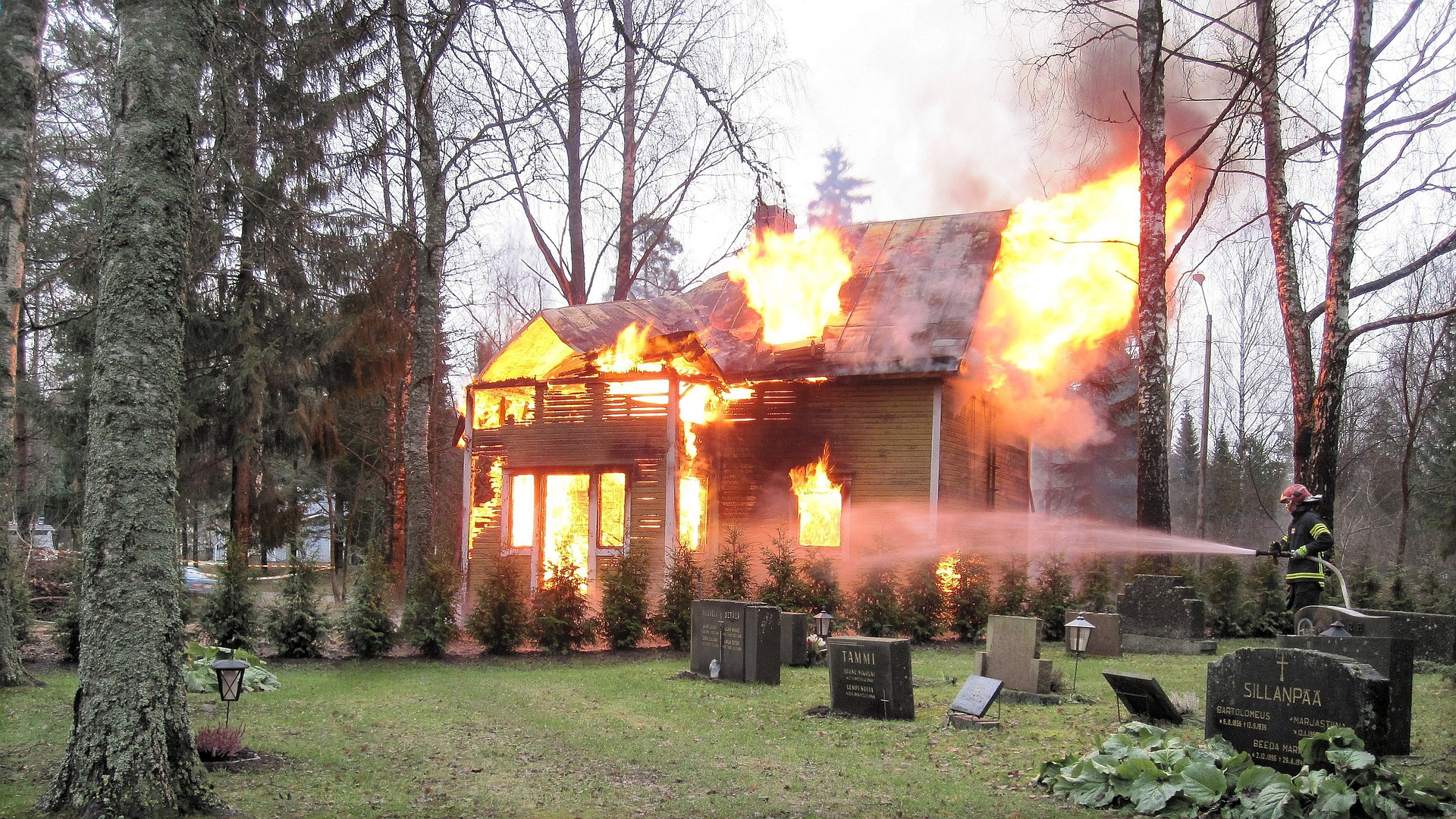
When you are self-renovating and are wondering, ``What should I do with the exterior walls?'', ``What material should I use for the roof?'', ``What grade do I need for windows and entrance doors?'', a simple (but decisive) question is ``Whether the property is in a fire-restricted area or a semi-fire-restricted area.''
And this is the scariest thing.
"We're not in a fire prevention area right now, so we can use this material, right?"
→ What if the area changes to semi-fire prevention in a few years, and the conditions change when an extension or large-scale repair is needed?
To conclude, the fire prevention zone determination is subject to change in the future. This is because fire prevention areas and quasi-fire prevention areas are ``areas (regional districts) designated in urban planning'', rather than the performance of buildings themselves. In other words, if the local government's town planning (zoning change, redevelopment, road maintenance, land readjustment, disaster prevention policy) moves, the boundaries can move.
This article is based on the premise of DIY renovation in Japan, but so that it can also be applied to readers overseas, we will summarize in a way that you won't get lost, ``why it changes,'' ``what procedures to change,'' ``unusual examples,'' and ``how to avoid regrets when choosing materials.''
If you're wondering "How much renovation or remodeling can I actually do on my own home?" or "Where should I even start?", please visit this page. If you're looking to learn more about specific renovation processes or construction details, don't miss this page as well!
Information on updates to this website will be delivered to you once a month.NewsletterIf you are interested, please register.
Please note that this document is not necessarily accurate, and should be used as reference information only.
So, here you go.
What is a fire prevention area/semi-fire prevention area (organize the terminology first)
First, let's organize terminology. If this is unclear, your judgment regarding material selection will be completely inaccurate.
"Fire prevention area/semi-fire prevention area"
This is an area defined by city planning (located within the framework of the City Planning Act) to reduce the risk of fire in urban areas. If you enter this area, the fire protection performance required of your building will become stronger (Article 61 of the Building Standards Act, etc.).
"Parts where there is a risk of fire spread"
Roughly speaking, it refers to the area where openings (windows, back doors, etc.) that are close to neighboring houses or the road are susceptible to fire and spread due to sparks and radiant heat. The idea is that "fire prevention equipment (e.g. fire doors, etc.)" is likely to be needed here.
Why does the fire prevention zone determination change? (The reason for the change is not “materials” but “town”)
Rather than "the materials will change once the area becomes a fire-restricted area," this is more accurate.
"The town's plan will change"
→ “City planning designation (fire prevention/semi-fire prevention) changes”
→ “Required building performance will change”
→ “Selectable materials and required certifications will change”
Documents from the Ministry of Land, Infrastructure, Transport and Tourism also indicate the idea that fire prevention zones are designated in areas such as commercial areas and along major streets, and semi-fire prevention zones are designated in relatively dense urban areas. In other words, the more people and buildings gather in a place, and the more damage it will cause if the fire spreads, the more likely it will be designated later.
From a self-renovation perspective, the triggers that make me think ``this is strange'' are as follows.
- Redevelopment and redevelopment in front of the station is progressing
- Main road maintenance (widening, bypass, roadside land use renewal) will be implemented.
- Land readjustment and urbanization zone incorporation are underway.
- The district plan is decided (it tends to be a comprehensive package that includes height restrictions, usage guidance, etc.)
For example, in some places, the minutes of city planning council meetings state that fire prevention zones and quasi-fire prevention zones will be changed in order to ensure disaster prevention in response to urban redevelopment projects.
What is the procedure for changing? (The “notice” system that DIYers should know at least)
Changes to fire prevention zones and quasi-fire prevention zones are usually made in stages, rather than suddenly changing tomorrow.
The keywords are "public notice," "public inspection," "opinion statement," "city planning council," and "notification."
- "Public inspection": Making a plan available for viewing by the general public for a certain period of time.
- “Opinion letter”: A mechanism that allows residents and interested parties to submit opinions during the public inspection period.
- "Notification": An act that takes effect by publicly announcing the final content
The City Planning Act has a well-organized process in which when deciding on a city plan, the draft is publicized and viewed for two weeks, and opinions can be submitted.
This is super important for DIY.
In other words, ``there is an opportunity to notice when changing the area.''
Specific examples of actual “spread” (Real in Japan)
It's scary to just say ``there is a possibility of change,'' so I'll provide some examples of actual increases.
Case 1: Expanding the semi-fire prevention area at once (Yamato City, Kanagawa Prefecture)
Yamato City clearly states in city documents that it has expanded the semi-fire prevention area to cover the entire area (approximately 705 ha) of the Class 1 low-rise residential area.
The point is that there is a real pattern of increasing numbers in "areas" rather than "dots."
Case 2: New designation in line with land readjustment and urbanization (Saitama City)
Saitama City has released materials for changes that will newly designate areas as quasi-fire prevention areas, including an ``approximately 6.8 hectare increase'' in areas such as the Miyamae area.
Typically, it is designated in conjunction with town development, such as "industrial agglomeration base" or "progress of land readjustment."
Case 3: “Strengthening” from semi-fire prevention to fire prevention (Matsuda Town, Kanagawa Prefecture)
Matsuda Town has indicated in its plan that several areas will be strengthened and newly designated in line with the change in zone use, such as from semi-fire protection area to fire protection area of approx. 1.1ha, and from undesignated to fire protection area of approx. 0.09ha.
The reality is that it is not the end when it becomes semi-fireproof, but that it is also possible to go from semi-fireproof to strengthened to fireproof.
If things change, what will happen to the selection of materials for self-renovation? (This is the main topic)
Now comes the main point. The fear of “changing areas” is that the logic of material selection will collapse.
However, rather than being blindly afraid, you can take countermeasures by breaking down what needs to be changed.
Trouble point 1: Requirements around openings (windows/doors) tend to be strong
The Building Standards Act requires buildings classified as fire prevention/semi-fire prevention to install fire prevention equipment in openings in exterior walls where there is a risk of fire spreading.
From a materials perspective, the grade of windows and doors (whether they fall under fire protection equipment) may interfere with the design assumptions.
In DIY terms, people who are planning to replace their windows want to avoid having to ``re-replace them later'' in light of future zone changes.
Trouble point 2: It is easy to assume that the exterior walls, soffits, and roofs are ``flammable''
Yamato City's materials also explain that in quasi-fire prevention areas, fire-retardant structures are required not only for openings, but also for soffits and exterior walls.
(To give you an engineering perspective, the main culprit for fire spread is not only sparks, but also flames from neighboring houses that can cause the outer walls and soffits to become hot and ignite, so making the outer skin less combustible is effective.)
Trouble point 3: Existing ineligibility and timing of “extension, etc.”
A situation in which an existing building no longer fully conforms to current laws as a result of a change in zoning is called "existing nonconformity." This in itself is not uncommon.
However, when carrying out expansions, renovations, large-scale repairs, etc., it is important to investigate the current situation and determine legal compliance.
Because self-renovation involves "fixing things little by little," plans tend to have to be redesigned if the area changes midway through. If you are reading this, this is probably the type of person you are afraid of.
So what do we do? How to select materials that “does not get stuck even if they change” (at the procedural level)
From here on, we are not talking about ``construction methods,'' but rather ``procedures for selecting materials that take into account the possibility that the judgment will change.'' You can do it as a DIY starting today.
Step 1: Confirm the current judgment using primary information
First of all, if there are any, you can use city planning maps (zoning maps) and public GIS to determine the correct location.
However, please note that the city clearly states that ``changes may not be reflected in the city planning map.'' Public GIS is also treated as a reference map.
If your remodeling project involves application and legal compliance, the final decision will be made at the City Planning Division, but there will be no mishaps.
Step 2: Check not only “fire prevention/semi-fire prevention” but also “Article 22 area” at the same time.
The entire city is classified as an Article 22 area (excluding fire prevention/semi-fire prevention).
In other words, it is not just "free because it is a non-fire prevention area!", but there is a normal possibility that conditions such as a minimum roof will be imposed.
Step 3: Organize materials based on “certification or noncertification” (how to read the catalog)
What is important here is information that shows that the product or configuration meets institutional requirements, such as ``ministerial certification'' or ``fire protection certification.''
A common pattern with DIY is to buy something based on the design or price, only to be told later that this configuration doesn't work.
All you have to do is simply write down the following for each potential purchase.
- Which area (fire prevention/semi-fire prevention/Article 22) is the product intended for?
- Which “configuration” is it certified for? (Performance may be determined by the base material and construction conditions, not just the product itself.)
- Save supporting documentation (manufacturer specification PDF, certification number, test result summary, etc.)
将来区域が変わったとき、あなたを守るのは「当時の根拠資料」です。口頭情報やSNSのまとめは、確認申請や実務では弱いです。
For example, even if you are shopping on Yahoo or Rakuten, try changing your search keywords to ``system-oriented'' such as ``semi-fire prevention zone compatible exterior wall materials,'' ``fire prevention equipment doors,'' and ``fire doors interior fittings.''
Step 4: Watch for “notice” of area change
Some cities have a policy of issuing notices for public inspection and submission of written opinions.
Even in general city planning, there is a well-organized flow of public notice, public inspection, written opinion, council, and notification.
There are only two recommended ways to watch.
- Regularly search for "public inspection", "city planning", and "opinion paper" on the city hall website
- Check for information on revisions to larger plans (urban planning master plans, etc.) (this tends to be a preview of changes to the entire town).
A perspective that is useful for people overseas as well (“requests increase due to zone change” is common all over the world)
I've talked about Japan so far, but similar things are happening overseas.
The reason is simple: if the risk (fire, especially urban fire or wildfire) changes, the designated area and required performance will be updated.
For example, in the state of California in the United States, there is evidence that updating the fire risk map has changed the regulatory environment. Public documents also explain that regulations regarding WUI (Wildland-Urban Interface: areas with high fire risk at the boundary between forests and urban areas) are being integrated and organized.
The names and details of Japan's "fire prevention area/semi-fire prevention area" and overseas systems are different. However, the structure of ``zoning changes → required material performance increases → impact on renovation plans'' is similar.
For overseas readers, if you search for keywords such as "zoning," "fire hazard," "WUI," and "building code amendments" in your own municipality, you can pick up "notices of change" using the same idea.
Common misconceptions (Ignore only the points that tend to cause accidents when DIY)
Misconception 1: “Once an area is decided, it is fixed, right?”
It is not fixed. City planning will be updated. Kashiwa City itself has issued a note stating that changes may not be reflected in the drawings. This operation is based on the assumption that updates are possible.
Misconception 2: “It’s confirmed because I saw it on GIS”
Public GIS is treated as a reference map. The terms of use for Kashiwa City's public GIS also state that it cannot be used as a public certification document for applications, etc.
It's convenient enough to use as a basis for making DIY decisions, but if you need final confirmation, it's safer to check at the counter.
Misconception 3: “Today’s renovations are small so it doesn’t matter.”
The smaller the revision, the more sensitive it may be to future changes. Regarding extensions to existing buildings, national guidelines have been issued to examine the current situation and ensure compliance with the law.
``When and how much should be touched to change the handling'' tends to depend on a case-by-case basis, so it is a good idea to factor in the ``risk of zone change'' early in the planning process.
Summary: What self-renovators should do today
Finally, focus on what you can do today.
- Understand whether your home is in a fire prevention/semi-fire prevention/Article 22 area using primary information
- Candidate materials are managed based on whether they are certified, the expected area, and the preservation of supporting materials.
- Keep an eye on the city's public inspections and announcements of opinions (city planning movements)
- If there is talk of station fronts, main roads, land readjustment, etc. in the neighborhood, assume that there is a possibility of a zone change and allow some leeway in the material planning (the purpose of the changes associated with redevelopment will be recorded in the meeting minutes).
The strength of self-renovation is that you can make your own decisions. That's why just being aware of the ``possibility that the judgment may change'' can significantly reduce regrets when choosing materials.
If you're wondering "How much renovation or remodeling can I actually do on my own home?" or "Where should I even start?", please visit this page. If you're looking to learn more about specific renovation processes or construction details, don't miss this page as well!
Information on updates to this website will be delivered to you once a month.NewsletterIf you are interested, please register.
Please note that this document is not necessarily accurate, and should be used as reference information only.
Well, then!
References (APA 7th edition)
e-Gov. (n.d.). Building Standards Act (Act No. 201 of 1950). e-Gov Law Search. https://laws.e-gov.go.jp/law/325AC0000000201

e-Gov. (n.d.). City Planning Act (Act No. 100 of 1960). e-Gov Law Search. https://laws.e-gov.go.jp/law/343AC0000000100

Ministry of Land, Infrastructure, Transport and Tourism. (2018). Regarding the bill to partially revise the Building Standards Act (including the concept of designation of fire prevention areas and semi-fire prevention areas). https://www.mlit.go.jp/common/001237294.pdf

Ministry of Land, Infrastructure, Transport and Tourism. (2025). Regarding the promotion of the use of existing buildings (Current condition survey guidelines for existing buildings, 3rd edition). https://www.mlit.go.jp/jutakukentiku/jutakukentiku_house_fr_000061.html

Ministry of Land, Infrastructure, Transport and Tourism. (2025). Current status survey guidelines for existing buildings (3rd edition). https://www.mlit.go.jp/jutakukentiku/content/001967456.pdf

Chiba Prefecture. (2025). Progress status of city planning procedures (FY2020). https://www.pref.chiba.lg.jp/tokei/toshikeikaku/shinchoku/r7/kettei-r7.html

Yamato City. (2022). Regulations for buildings in Yamato City will change (expansion of semi-fire prevention areas). https://www.city.yamato.lg.jp/material/files/group/53/jyunbouka.pdf

Matsuda Town. (2025). Matsuda City Planning Changes to fire prevention areas and quasi-fire prevention areas (Matsuda Town decision). https://town.matsuda.kanagawa.jp/uploaded/attachment/17508.pdf

Saitama City. (2025). Changes in Saitama City Planning Fire Prevention Areas and Semi-Fire Prevention Areas (Saitama City Decision). https://www.city.saitama.lg.jp/006/008/002/012/004/013/p120184_d/fil/giansyo432.pdf

State of California, Department of General Services. (2026). SFM 04-25 ISOR-PT7 (discussion of 2025 FHSZ map changes and need for standards). https://www.dgs.ca.gov/-/media/Divisions/BSC/03-Rulemaking/2025-Intervening-Cycle/CAC/2026-02-17-BFO-SDLF/SFM-04-25_ISOR-PT7.pdf

San Diego County. (2025). 2026 Consolidated WUI Code (strikeout/underline version). https://www.sandiegocounty.gov/content/dam/sdc/sdcfa/documents/prevention/2026CWUIConsolidatedCodeStrikeoutUnderlineVersion.pdf
 English
  Japanese
Leave a Reply
You must be logged in to post a comment.