
Hello everyone, this is DIY Renova.
One day when I was doing self-renovation, I suddenly realized something.
"I want to lower the roofing material to the first floor, but I'm afraid of having to do it manually."
"My back feels like it's going to give out when I load asbestos-filled scrap wood bags onto a truck."
"I want to dig out the roots of the trees in my garden, but it seems impossible with just a shovel."
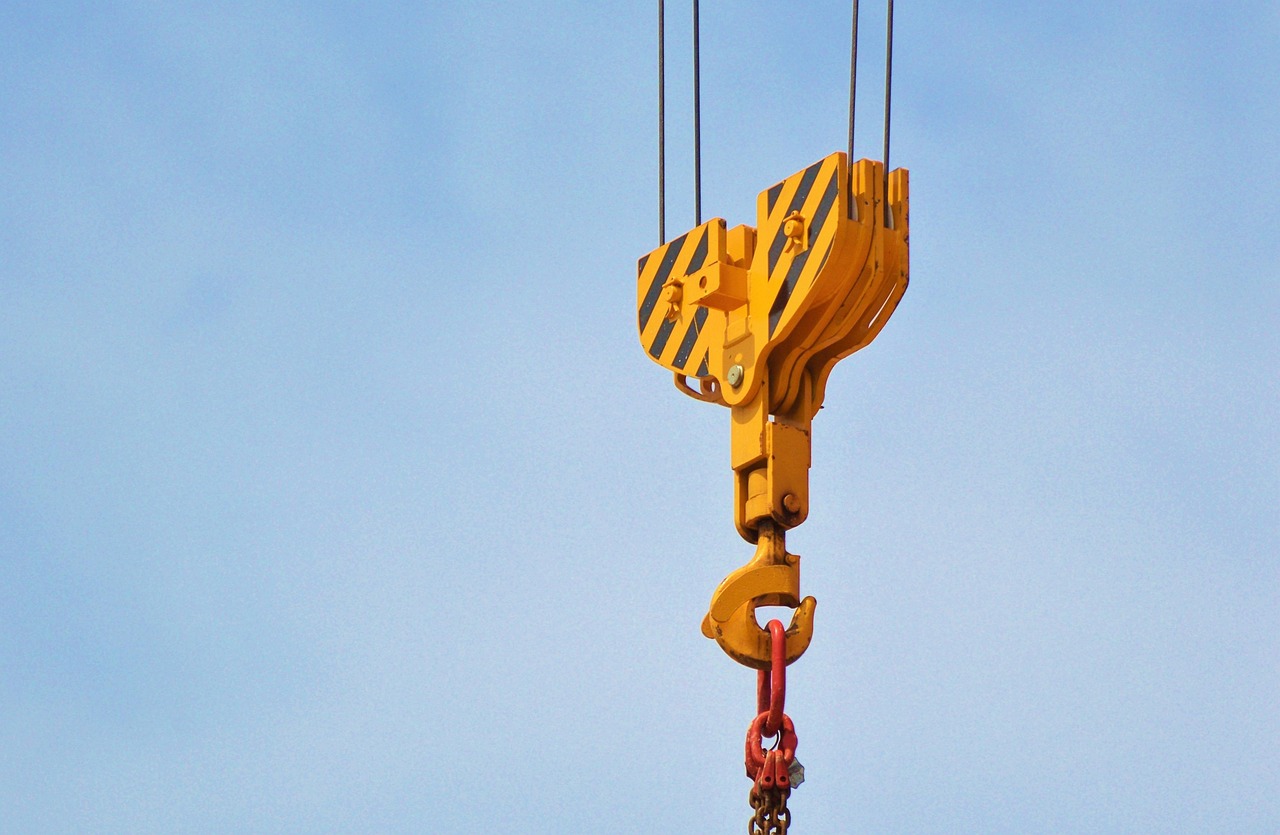
Hoists and sling slings come in handy in situations like this.
In this article, we will summarize how to choose hoists and accessories for ``lifting up and down loads and garden work'', mainly for people who are self-renovating wooden houses in Japan. Even people living overseas have the same needs: ``I want to safely load and unload luggage at private homes,'' so the concept itself is globally applicable.
If you're wondering "How much renovation or remodeling can I actually do on my own home?" or "Where should I even start?", please visit this page. If you're looking to learn more about specific renovation processes or construction details, don't miss this page as well!
So, here you go.
How does having a hoist change self-renovation?
Surprisingly, many of the items handled during self-renovation are moderately heavy.
・Bundle of galvalume steel plates and siding (several tens of kg)
- Garbage bags containing tiles and concrete
・Sandbags that have absorbed water
・Felled garden trees and roots
Carrying all of these items manually increases the risk of injuring your lower back and shoulders.
By using a hoist, even a small number of people can move cargo without dropping it, breaking it, or injuring themselves.
At construction sites in Japan, the work of hoisting cargo with a hoist or crane is called "slinging work," and a qualification system has been established under the Industrial Safety and Health Act (Reference: Ministry of Health, Labor and Welfare "Safety and Health of Crane/Slinging Work")Ministry of Health, Labour and Welfare.
Although there are no qualifications required for personal home DIY, you can significantly reduce the risk of accidents by imitating the safety concepts followed by professionals as much as possible.
Main types and characteristics of hoists
First, let's roughly organize the types of hoists commonly used in self-renovation.
Lever hoist (lever block)
This type sends the chain by moving the lever back and forth.
- Features
- Many are small and light, making them easy to carry
- Easy to use not only for vertical pulling but also for ``horizontal pulling'' and ``diagonal pulling''
- Also suitable for positioning loads and pulling out tree roots.
- Points to note
- Many have a rated load of around 0.75t (750kg), but the main premise is not to use them at the rated load limit.
- Since force is transmitted through lever operation, your arms will get tired if you work for a long time.
A lever hoist is very convenient for people who often do ``pulling'' work, such as gardening, moving roofing materials laterally, or pulling out roots.
Chain block (manual chain hoist)
This is a type that is hung above and the load can be raised or lowered by pulling a thin chain with your hand.
- Features
- Strong vertically up and down
- You can raise and lower heavy loads more easily than with the lever type.
- A familiar shape at construction sites
- Points to note
- Generally not suitable for horizontal or diagonal pulling (chain tends to twist easily due to structure)
- The main body is heavier than a lever hoist, making it a little difficult to maneuver.
If your main purpose is "pure vertical movement" such as unloading items from the roof to the garden, a chain block is also a candidate.
electric hoist
This type uses an electric motor to wind up chains and wires.
- Features
- Raising and lowering heavy objects is extremely easy as you can raise and lower them with the touch of a button.
- Work efficiency is different at sites where there are many repetitions
- Points to note
- Price is high and power supply must be secured
- There are more management items than manual, such as use in rainy weather and risk of electric shock.
In many cases, a manual hoist (lever or chain) is sufficient for self-renovation, so this article will mainly focus on manual hoisting.
How to choose a hoist for self-renovation
How to determine the rated load
The "rated load" is always displayed on the hoist.
For example, if it says "0.75t", it means it is designed to lift up to 750kg.
The important thing here is to consider not only the actual weight of the luggage, but also the safety factor.
Japanese sling manufacturers and safety guidelines usually design with a safety factor of about 4 to 6 times in mind, but it is safe for users to be conscious of keeping the load to 50 to 70% of the rated load (Reference: KITO "Types of slings used for sling work and inspection standards")Kito Co., Ltd..
A typical weight image used in self-renovation is as follows.
- Bundle of metal roofing materials: Approximately 20 to 50 kg (depending on the thickness and number of boards)
- Asbestos waste bags: Depending on the contents, each bag often weighs around 10 to 30 kg.
- The roots of a medium-sized garden tree can weigh over 50 kg when covered with soil.
Considering the situation in which these items are hung together, combining a 0.75t class hoist + a 1t class sling/mocco will give you plenty of leeway.
Lifting height (chain length)
Another thing that is quite important is the "lifting height" (or lifting height).
- Lever hoist with chain length 3m
- It is often not enough to lower everything from the roof on the second floor to the ground on the first floor in one go.
- It is necessary to operate by ``receiving it at the window sill in the middle and then lowering it one more step.''
- Hoist with chain length 6m
- Increasingly cases can be lowered from the eaves to the ground in the garden at once.
- When pulling the roots of garden trees, it is easy to maintain sufficient distance between the worker and the roots.
For self-renovation purposes, aim for a chain length of 3m or more, and if possible, 4 to 6m, so you won't regret it later.
Deciding whether to use manual or electric
- Work frequency is low (several times to several dozen times)
- Load less than 500kg
- Difficult to get power on scaffolding or roof
Under these conditions, a manual type lever hoist or chain block is more realistic.
Electric hoists are attractive, but considering the cost, power supply, and safety management, we recommend that you first install a manual hoist and get a feel for how much you will use it before considering it.
Basics of slinging and safety that you should follow in Japan
Positioning of sling work
In Japan, slinging work, which involves hoisting cargo using a crane or hoist, must be carried out by qualified personnel under the Industrial Safety and Health Act (Reference: Ministry of Health, Labor and Welfare's ``Slinging Skills Training Regulations'')Ministry of Health, Labour and Welfare.
Although there are no direct regulations regarding self-renovation that is carried out at one's own risk in one's own home, I think you should be as careful as a professional in the sense of not injuring anyone or dropping your belongings on a third party's property.
The points are as follows.
- No one can get under the hanging load.
- Do not exceed the rated load (do not lift if you are unsure)
- Inspect the hanging equipment each time for damage (e.g. frayed seams, wire hangnails, etc.)
- Do not operate in an unreasonable position while working (you may fall if you lose your balance)
Documents from the Ministry of Health, Labor and Welfare repeatedly emphasize that ``Selection, inspection, and signaling of lifting equipment are particularly important during sling work'' (Reference: Ministry of Health, Labor and Welfare ``Safety and Health of Crane and Sling Work'')Ministry of Health, Labour and Welfare.
How to choose the type and material of hanging equipment
Even if you only have the hoist itself, you won't be able to hang the cargo.
By combining accessories such as ``slings,'' ``shackles,'' and ``mocko,'' you can safely wrap your luggage.
Fiber sling (belt sling)
A belt-shaped sling made of fibers such as nylon or polyester.
- Features of polyester
- Low elongation and excellent dimensional stability (easy positioning of loads)
- A strong synthetic fiber with excellent tensile strength, durability, and weather resistance (Reference: TRUSCO/Monotaro product description)
- Features of polypropylene
- Light, inexpensive, and resistant to chemicals
- However, the instruction manual clearly states that it is "relatively sensitive to ultraviolet rays and should not be used outdoors all the time" (Reference: Toray International "Chemical Sling Instruction Manual", various belt sling precautions)marutsu online
- Features of nylon
If your self-renovation project involves mostly outdoor work, it is safe to use polyester slings as the basics, and then consider polypropylene slings when special uses such as chemical tanks arise.
wire rope sling
It is a wire rope made of twisted steel wire with eyes cut on both ends.
- It has low elongation and high strength, making it suitable for lifting heavy and long objects (Reference: KITO lifting equipment explanation)Kito Co., Ltd.
- However, it is heavy and difficult to handle, and the wires can easily break off and injure your hands, so it is only suitable for DIY purposes such as ``seriously pulling out roots'' and ``moving stones.''
By the way, related
When transporting round cans such as drum-shaped cans, there are some things like the following! ! (I didn't know that, and only learned about it this time. Looks useful!)
Mokko (Sheet Mokko/Wire Mokko)
A hanging device that holds luggage in the form of a bag/hammock.
- sheet mocco
- Hammock-like shape made of cloth or sheets
- Suitable for hanging together "baggage that falls apart" such as sand, garbage, waste material bags, etc.
- It is said that square-shaped packages that are likely to tear the sheet should be avoided (Reference: Explanation of Nikko Rope and Daido Kikai)daidoc.co.jp
- wire mocco
- A net-like mocco surrounded by wire rope.
- Excellent durability and suitable for sites where it is used repeatedly
- That's why the price is high
For the theme of this article, ``lifting and lowering cargo and garden work,'' ``Polyester Sheet Mokko (rated 0.5 to 1 ton)'' has a good balance between cost performance and safety.
The idea of hanging it like a hammock
If you wrap a sling around smooth roofing materials or asbestos bags, they will easily slip off. This is where the ``hammock-like hanging method'' comes into play.
The image looks like this:
- Make a mocco or belt sling into a “U” shape and hold it from underneath the luggage.
- Place your luggage so that it “sits” on the net or in the recess of the seat.
- If necessary, insert a board or rubber mat between them to distribute the load.
A construction column also explains, ``If it is not possible to pass the sling directly through the load, use protective equipment and wrap it in a mokko for transportation.'' (Reference: Lifting contractor's explanation of slinging)SHOOT Co., Ltd..
The key is to switch from the idea of ``grabbing the luggage itself'' to ``hanging up the hammock with the luggage on it.''
Recommended configuration examples by application
From here, I will write specific examples of combinations for the three uses that served as the starting point for this article. This is just an example, so please check the dimensions and load at the site and make adjustments.
When lowering roofing materials to the first floor
Assumed cargo: A bundle of galvalume steel plates or siding boards (approximately 20 to 40 kg)
The image is that the roof is lowered in stages from the roof to the eaves to the ground.
An example of recommended configuration:
- Lever hoist 0.75t/chain length 3~6m
- 2 polyester belt slings 1t/3~4m long
- Sheet Mocco 0.5-1t (if available)
- Rubber mat or control panel (to prevent luggage from shifting)
An example of how to use:
- Secure the hoist to roof beams or temporary scaffolding
- Hold a bundle of roofing materials in a “hammock” shape with a sheet mocco or board + belt sling
- Raise the load slightly and check the balance and angle.
- Slowly descend while talking to the people on the first floor.
At this time, it is important to ensure that no one can get under the load and to secure a place on the ground to place the load.
Loading asbestos bags onto a truck
Asbestos waste bags have the troublesome property of being easily torn and slippery. I won't go into detailed disposal rules here, but it's best to be thorough about not hooking bags directly.
Recommended configuration:
- Lever hoist 0.75t
- Sheet Mocco 0.5~1t (made of polyester)
- Rubber mat or control panel
- Several shackles (1t class)
An example of how to use:
- Spread the mocco near the ground and spread a rubber mat or control panel.
- Place an asbestos bag on top of it (be careful not to rub the bags against each other)
- Connect the four corners of Mocco to the hoist via the shackle
- Raise the load slightly and check that the bag has not shifted before placing it on the truck bed.
Mocco manufacturers also warn, ``Do not casually put anything that could damage the sheet into a Mocco with a sheet.'' (Reference: Nikko Rope)nikkoseiko.co.jp.
For peace of mind, protect the corners of the bag with packing tape or cushioning material.
When pulling out the roots of a garden tree
The roots of garden trees are often much heavier than the parts that can be seen with the naked eye. To be on the safe side, it is realistic to not be too greedy and cut it down to a medium-sized stock.
Reference video:
Recommended configuration:
- Lever hoist 0.75~1t/Chain length 3~6m
- Wire rope sling or polyester sling 1~2t/length 3~4m
- Sturdy anchors (sleepers buried in the ground, car tow hooks, etc.)
- Shackle 1~2t class
How to use it:
- Dig around the roots to some extent to break up the soil (it won't come out just by pulling)
- Wrap the sling around the base several times and secure with a shackle.
- Connect the other side to the hoist and secure the hoist to the anchor
- Apply tension little by little, and when the roots move, break up the soil again → Repeat.
At this time, it is important that no one stands in the direction of the hoist or anchor being blown away. There are cases where a wire mocco is used, but for home garden work, a sling + hoist is often sufficient (Reference: Notes on wire mocco)daidoc.co.jp.
By the way, some people did it without a chain lever (hoist) as shown below.
shopping list
Based on this article, I have put together a list of things you need at least to start hoisting work.
- Lever hoist 0.75t class
- Example: Search for "Lever hoist 0.75t chain 3m polyester" etc.
- "Amazon product link here"
- Polyester belt sling 1t/length 3~4m (set of 2)
- "Polyester sling 1t 4m" etc.
- Sheet Mocco (made of polyester, rated 0.5~1t, 1m~1.5m square)
- "Lifting net 1t 1.5m" etc.
- Shackle 1t~2t class (several pieces)
- Rubber mat or control panel (to be placed between the luggage and the sling)
- Leather gloves, helmet, safety shoes for work
Inspection and storage of hanging equipment
For safety, it is essential to check the condition of the hanging equipment.
Instruction manuals for polyester slings and belt slings indicate the following disposal standards (Reference: TRUSCO "Belt Sling Instruction Manual")tracostela.
- There are large cuts and wear on some parts of the belt.
- The sewing thread at the eye part (the looped part) is cut.
- The surface is hard and burnt.
- The identification tag is so damaged that it cannot be read.
It is safe to discard slings that fall under these categories without thinking that it is a waste, even if you are doing DIY.
When storing,
- A place out of direct sunlight
- A place with little rain or humidity
- Hang without touching sharp edges
By being aware of these points, you can extend the lifespan (Reference: Notes on slings from each company)ihs1187.com.
Summary: Use hoists and lifting equipment as “small cranes”
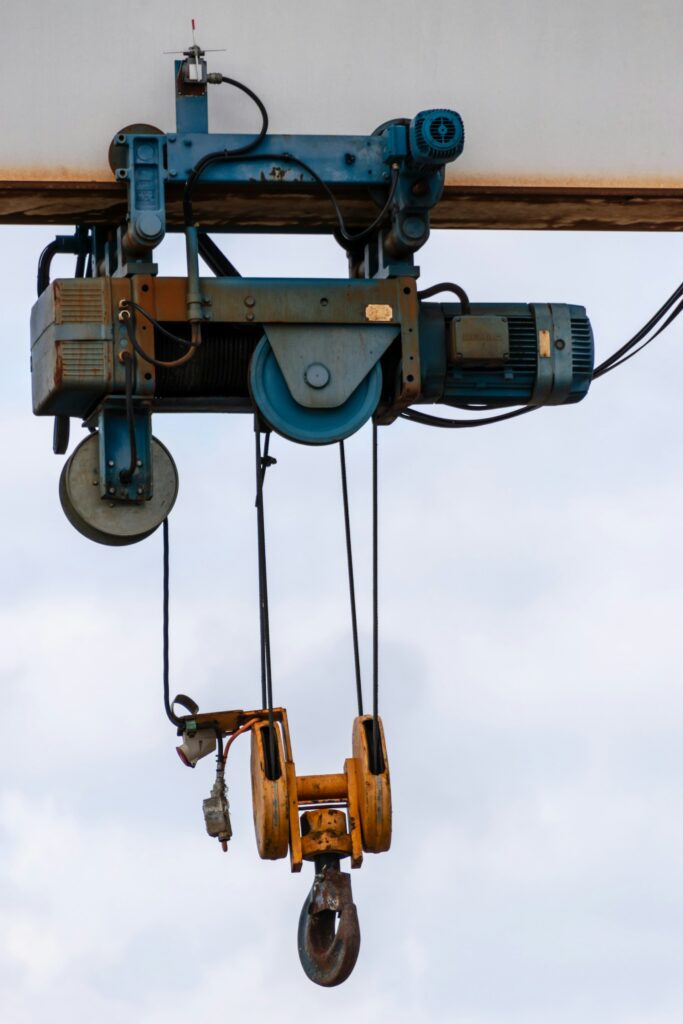
Introducing hoists and slings during self-renovation will really increase what you can do.
- Roofing materials and waste materials can be safely moved vertically.
- You can load heavy asbestos bags and garbage bags onto a truck without breaking your back.
- Even a small number of people can move the roots of garden trees and heavy stones.
On the other hand, ``selecting the wrong tools'' and ``ignoring the basics of slinging'' have led to serious accidents even in professional settings (Reference: Ministry of Health, Labor and Welfare's collection of accident cases)Ministry of Health, Labour and Welfare.
That's why even personal DIY
- Have a margin for the rated load
- Use polyester slings outdoors
- Choose a hanging method such as Mocco or hammock according to your luggage.
- Always check that there is no one under the load before operating it.
It is important to install in yourself the ``safety standards from the same perspective as professionals''.
If used properly, a hoist is like welcoming a "small crane" into your home.
I hope this article helps you make your self-renovation and garden work as safe and enjoyable as possible.
References/Reference links
- Ministry of Health, Labor and Welfare “Safety and health of crane and sling work”
- Ministry of Health, Labor and Welfare “Sling Skill Training Regulations”
- Ministry of Health, Labor and Welfare “Crane Safety Regulations”
- KITO official blog “Types and inspection standards of slings used for sling work”
- TRUSCO/Monotaro various “Polyester Sling” product description page
- Toray International "Chemical Sling Instruction Manual"
- Daido Kikai Column “3 Recommended Wire Mokkos! Explanation of key points on how to use them”
- Nikko Rope “Wire Mokko/Mokko with sheet” product information
We sincerely thank each creator and expert for their information.
If you're wondering "How much renovation or remodeling can I actually do on my own home?" or "Where should I even start?", please visit this page. If you're looking to learn more about specific renovation processes or construction details, don't miss this page as well!
 English
  Japanese
Leave a Reply
You must be logged in to post a comment.