
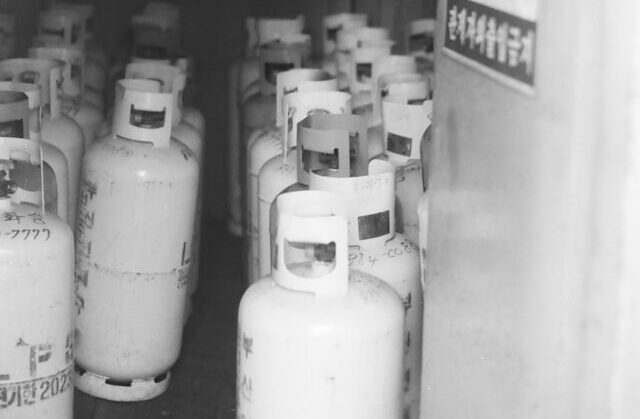
For those who want to switch from an LP gas water heater to an electric water heater when renovating their home
Introduction: Why are people having trouble with LP gas removal?
When doing self-renovation,
"I wanted to change my water heater to electric, but the gas company and electrician turned me down."
You may come across a situation like this.
especially
- A used home where the previous owner has already canceled the LP gas contract.
- It is unknown which LP gas company was involved.
- A neighbor's LP gas pipe may be running under your property.
When these conditions are met, the property becomes a ``high-risk property'' from the perspective of the agent.
the result,
- Rejected without giving a clear reason
- They only give an estimate for the electric water heater and ignore the gas removal.
- ``I don't know how the underground piping works...'' he says.
This tends to lead to a confusing development.
In this article, for self-renovators who have the same problem,
“Where is the work of professionals in Japan’s LP gas removal?”
“What steps should I take to safely and smoothly switch to an electric water heater?”
I will summarize it as concretely as possible.
The theme is specialized in "gas-related removal".
We will minimize the details of how to choose an electric water heater and wiring, and concentrate on organizing the gas side.
If you're wondering "How much renovation or remodeling can I actually do on my own home?" or "Where should I even start?", please visit this page. If you're looking to learn more about specific renovation processes or construction details, don't miss this page as well!
Information on updates to this website will be delivered to you once a month.NewsletterIf you are interested, please register.
Please note that this document is not necessarily accurate, and should be used as reference information only.
So, here you go.
“Laws and qualifications” you absolutely need to know when removing LP gas
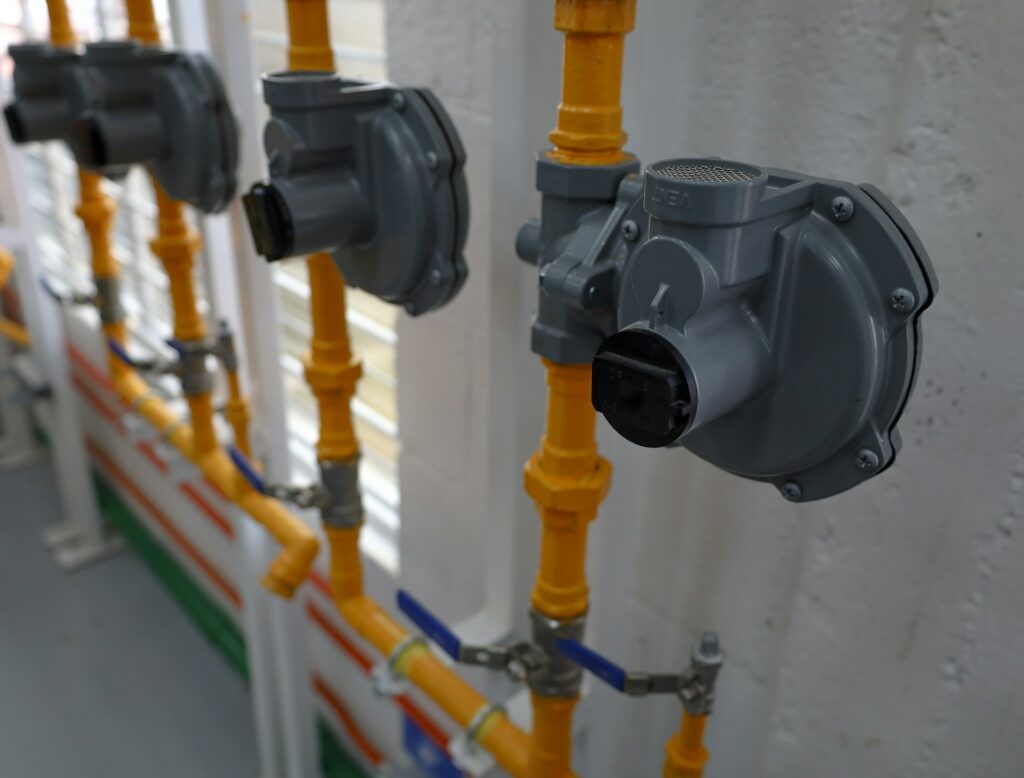
The first thing I would like to note is that
"Removal of LP gas piping and equipment should, in principle, be carried out by qualified personnel."
That is.
In Japan, regarding equipment construction for LP gas (liquefied petroleum gas)
“Act on Ensuring Safety and Proper Transactions of Liquefied Petroleum Gas (commonly known as the Liquid Stone Act)”
The law requires safety. (Ministry of Economy, Trade and Industry, 2024) Ministry of Economy, Trade and Industry
What is a liquefied petroleum gas equipment engineer?
For LP gas piping connections and work around gas valves.
"Liquefied petroleum gas equipment engineer"
A national qualification is required. (Ministry of Economy, Trade and Industry, Liquefied Petroleum Gas Equipment Engineer, 2024) Ministry of Economy, Trade and Industry
A liquefied petroleum gas equipment engineer is responsible for the following tasks, for example:
- Connecting and removing gas valves and piping
- New installation/repair of gas piping
- Construction of connection parts of gas equipment, etc.
In Other Words,
"Remove the LP gas water heater and close (cap) the pipes."
This kind of work is basically the work of people who have this qualification.
Gas Equipment Installation Specialist (GSS)
Although the qualification is closer to city gas,
For gas appliance installation work, there is also a qualification system called ``Gas Appliance Installation Specialist (GSS)''. (Japan Gas Association, 2023) gas.or.jp.
In any case,
``Doing work that comes into direct contact with gas pipes by DIY'' is completely out of the question.
Being aware of this is important from both safety and legal compliance perspectives.
What you can and must not do with DIY
I think this is what I'm concerned about as a self-renovator.
An example of what you can do with DIY
- Construction of areas that do not come into contact with gas, such as painting the exterior walls around water heaters and scaffolding.
- Filling holes after removal (mortar repair and external wall patching)
- Communication with gas companies and organization of drawings
- Recording in photos and drawings what kind of piping and equipment was located where
These are within the scope of "do not touch gas equipment", so they fall within the scope of DIY.
Things you should never do when DIY
- Remove the LP gas water heater yourself
- Loosen/cut the gas pipe nut
- Trying to dig underground gas pipes yourself
- Deciding that the tube is dead anyway, remove the cap and tap it.
These tasks can lead to accidents, and are legally required to be performed by qualified personnel. (Ministry of Economy, Trade and Industry, 2024) (Japan Gas Appliance Inspection Association, 2017) Ministry of Economy, Trade and Industry
The more you like self-renovation, the more you want to do it yourself.
Gas is the only genre where it is important to have the courage to leave everything to the professionals.
Overall picture when changing from LP gas water heater to electric water heater
From here, we will organize the actual flow step by step.
If you write the flow roughly, it will look like this.
- Understand the current gas equipment
- Request “piping confirmation and removal” to the LP gas company or gas construction shop
- Have the gas water heater + piping shut off and removed.
- After that, we will have the electric water heater work done (electrical work + plumbing connections).
The point is
“Gas removal” and “electric water heater installation” are almost separate projects.
It is to think as follows.
Organize the current gas equipment
First, let's take a look at the current state of the LP gas equipment in your home.
Points to check
- Do you have a gas meter or cylinder left?
- Where do the gas pipes exposed outdoors run?
- Are the gas pipes around the water heater rising from the ground or coming out from the outside wall?
- Is the gas pipe to your neighbor's house likely to pass through your property (as far as it can be seen)?
What is convenient to do here is
- Take photos from various angles
- Leave a simple sketch of the piping route, even if it is done by hand.
Even if it is not possible to completely remove the piping in the future,
If you can figure out which areas are dangerous to dig, the risk will be greatly reduced.
What to ask the gas company/gas construction shop
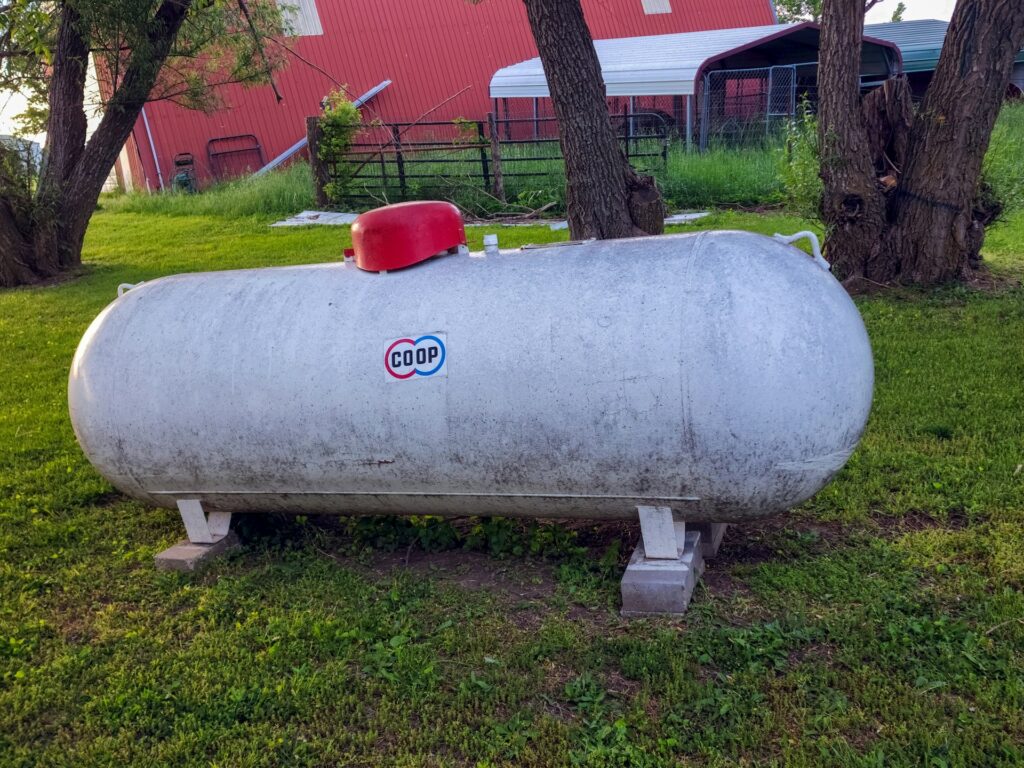
Next is the part where you consult with an LP gas professional.
Who should I contact?
In Japan, LP gas "supply equipment" is provided by dealers (gas companies),
As a general rule, consumers are responsible for managing ``consumer equipment'' (pipes and equipment in their homes). (Ministry of Economy, Trade and Industry, 2022) Ministry of Economy, Trade and Industry
However, in practical terms
- Original LP gas store (best if you know)
- Stores that sell LP gas nearby
- Gas construction shop that can perform LP gas equipment construction
Somewhere in
"I would like you to check the condition of the existing LP gas piping."
This will be a form of consultation.
Example sentences when communicating by phone or email
For example, it looks like this.
``I bought a used house and am self-renovating it.
The previous owner had canceled his LP gas contract, and it is unclear which company he had a contract with.
I would like to remove my existing LP gas water heater and switch to an electric water heater.
Because we do not know whether the LP gas piping on the premises is alive or not,
Could you please give me a quote for ``confirming whether the pipes are alive and well, and if necessary, removal and plugging work''? ”
The point is
- Show your will not to remove the property on your own
- Communicate your goal of switching to an electric water heater
- Be honest about your concerns about not knowing whether the pipes are alive or not.
If you hold this area,
It also makes it easier for business owners to visualize the situation.
Confirmation of aliveness of pipes and details of removal work
During the actual site investigation and demolition work, the following will be carried out:
1) Confirmation of aliveness of pipes
- Check around gas cylinders and main valves
- Check if there is any gas left using a pressure tester
- Check for leaks with a gas detector
There are commercially available gas detectors for home use,
The ones used by professionals differ in accuracy and specifications. (Ministry of Economy, Trade and Industry, 2022) Ministry of Economy, Trade and Industry
For DIY purposes,
- Install a “household gas leak alarm” to check the safety of your home
I think it would be good to use it in this way. (However, if you are using propane gas, it should be given to you at the time of installation or contract.)
2) Removal of the water heater body
- Close the gas valve and disconnect the pipes.
- Remove the water heater body (work method varies depending on whether it is wall-mounted or stationary)
- Properly block gas pipes after removal (seal with caps or plugs)
This "blocking of gas pipes" is an important task that should be performed by qualified personnel. (Liquid Stone Law/Related Notifications) Ministry of Economy, Trade and Industry
3) Handling of underground piping
This is often the real reason why a request is refused due to underground piping.
- If the piping is completed only within the premises, remove it or close off the end and seal it underground.
- If the pipes to neighboring houses run parallel to each other, they cannot be removed easily.
- There are cases where only part of the tube is dead and another route is active.
For this reason, underground piping is handled on a case-by-case basis.
After inspecting the site, the contractor will decide how much to touch.
Estimated cost for LP gas removal
I'm also concerned about money, so
We will organize the market prices gathered from reliable information sources.
- City gas pipe removal cost: Approximately 30,000 to 50,000 yen (for a detached house) (estimated by a demolition-related information site) Revlish Co., Ltd.
- Removal cost of propane gas equipment: Depending on the contract details, some commentators say the average price is around 15,000 to 30,000 yen (dismantling companies and LP gas related sites) ACTIVE for demolition work in Okayama | Vacant house demolition/asbestos investigation
- Cost of LP gas piping work (new installation): Typically around 70,000 to 150,000 yen for a detached house (commentary from LP gas NPO, etc.) Propane NPO
like you
“Confirmation of existing piping alive and well + removal and closure of necessary parts”
In that case,
- Investigation + removal from tens of thousands of yen to low 100,000 yen range
- More if the piping route is complex or long, or if additional work is required.
I think it will be easier to prepare psychologically if you look at it that way.
It varies depending on the contract details (free loan contract, penalty, etc.)
If you can find past contracts, be sure to check them. (LP gas contract explanation site, etc.) Propane NPO
Be aware of the "boundary line" with electric water heater construction
This is all about the gas side.
From here, we will summarize the relationship between gas removal and electric water heater construction.
No “deep excavation” required for electrical work itself
When replacing an electric water heater (electric water heater/EcoCute),
- 200V dedicated circuit wiring (wall/ceiling/underfloor route)
- Connection of water supply, hot water supply, and drain pipes
- EcoCute installs foundation blocks for heat pumps
The focus is on work such as
Basically, there is no need to dig deep into the ground.
However, when installing a new foundation block,
The ground may be leveled several centimeters from the ground surface.
Why is it still necessary to remove gas first?
The problem is not the excavation itself.
"There may be a live gas pipe nearby."
That's the risk.
If you mess around with the outside structure before the gas removal has been completed,
- By chance, there was a pipe in the place where I inserted it shallowly with a shovel.
- Damaged a neighbor's LP gas pipe
There are also possible worst-case scenarios.
Therefore, from the electrician's perspective,
If possible, I don't want to touch a "gas-related field where things are gray"
This psychology works.
If you understand this,
The reason why the electrician turned you down in the first place should now become clear to you.
Common problems and tips to avoid them
Contract trouble
- Removal costs and penalties will be incurred under the free rental agreement.
- Talks continue with ambiguity as to who will pay for the removal costs.
In response,
- Find as many contracts as possible
- If you are unsure, be sure to ask the contractor who came to inspect the site whether there will be any removal costs as stipulated in the contract.
- Not only verbally, but also in writing via email and quotation forms
That is important. (LP gas contract explanation site) Propane NPO
misunderstanding in communication
- "I asked them to install an electric water heater, but why can't they install a gas one?"
- "When I consulted the gas company, they told me that the electrical part was different."
This is basically
“Gas removal” and “electric water heater installation” are separate jobs.
That's why the misunderstandings occur.
from the beginning
“Gas removal is done by a gas company, electric water heaters are taken care of by an electrician.”
If you separate it in your head,
Stress will be greatly reduced.
Tools and goods that are safe to have (ideas for affiliates)
- Household gas leak alarm
- If you search for "Gas leak alarm for LP gas", you will get many hits.
- For safety confirmation before and after removal
- Distance meter/measure
- ``Laser distance meter'', ``5m measure'', etc.
- It is useful when recording the position of piping, so it can be used as a "companion when creating drawings."
A word of additional information for overseas readers (assuming that it is in Japan)
This article is written based on Japan's LP gas system and law (Liquid Stone Law).
Overseas,
- Qualifications required for gas equipment construction
- Division of responsibility between gas companies and consumers
- Rules for removing pipes
may differ significantly.
What I would like to convey to overseas readers is:
``Removal of gas piping and gas equipment is often the job of qualified personnel in any country, so
Even if you are doing a self-renovation, be sure to ask a professional for the gas.”
That's one point.
Summary: Accelerate self-renovation by leaving gas removal to professionals
Finally, here is a summary from a self-renovation perspective.
- Removal of LP gas piping and water heaters is a "job for qualified personnel" both legally and safely.
- What you can do with DIY is "organizing information, recording, and surrounding construction"
- First, organize your current gas equipment with photos and notes.
- Request a quote from an LP gas retailer or gas construction shop for ``confirmation of aliveness of pipes + removal and plugging work''
- After the gas removal is completed, work on the electric water heater will proceed separately.
- Be sure to save contracts and estimates, and clearly state who will pay how much.
If the gas removal part can be cleared safely,
After that, electric water heater, insulation repair, water area renovation, etc.
The degree of freedom in doing the self-renovation you want to do will increase at once.
"I'll leave the gas to the professionals."
Instead, "planning, research, recording, and finishing" are all done by DIY.
With this division of roles, let's proceed with the renovation in a fun and safe manner.
Information on updates to this website will be delivered to you once a month.NewsletterIf you are interested, please register.
If you're wondering "How much renovation or remodeling can I actually do on my own home?" or "Where should I even start?", please visit this page. If you're looking to learn more about specific renovation processes or construction details, don't miss this page as well!
Well then, thank you for reading this far!
References/reference sites
(None of these are predatory journals, but focus on public institutions, professional organizations, and specialized sites.)
- Ministry of Economy, Trade and Industry. “Liquefied Petroleum Gas Equipment Engineer” [Explanation of the qualification system based on the Liquid Stone Law] Ministry of Economy, Trade and Industry
- Ministry of Economy, Trade and Industry. “LP gas safety and regulations” “LP gas safety” [LP gas safety and disaster countermeasures] Ministry of Economy, Trade and Industry.
- High Pressure Gas Safety Association. “Liquefied Petroleum Gas Equipment Engineer Training” [Training system for LP gas equipment construction] khk.or.jp
- Japan Gas Association. “Gas Equipment Installation Specialist (GSS) System” gas.or.jp.
- Japan Gas Appliance Inspection Association. “Qualification is required for gas connection!” [Materials to raise awareness that qualifications such as liquefied petroleum gas equipment engineer are required for connection of LP gas equipment] Japan Gas and Oil Equipment Industries Association (JGKA)
- Sites that explain propane gas prices and construction costs (Propane Gas Price Consumers Association, LP Gas NPO, etc.) [Market information on LP gas piping construction costs and removal costs] Gas Ou
- Specialized site related to gas pipe removal/demolition work [Explanation of city gas/LP gas removal costs and precautions when dismantling] Revlish Co., Ltd.
I will introduce this area with a link at the bottom of the article.
This will make it easier to convey to readers the "transparency of information sources" and "respect for creators."
 English
  Japanese
Leave a Reply
You must be logged in to post a comment.